This page is Welsh
Highland and W&L: updated 26th
March 2018.
All photos © Robert and
Barbara Darlaston
Please allow time for
photographs to download
Page
contents:
The
Welsh Highland Railway.
Welshpool
& Llanfair Railway, August 2009 and June 1956.
The Welsh Highland Railway:
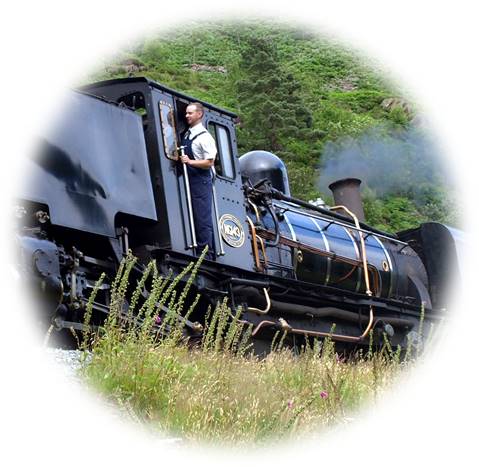
HISTORICAL NOTE: The Welsh Highland Railway had its origins in the
1870s with a plan to build a network of lines in Caernarfonshire, but initially
only the line from Dinas (on the LNWR south of
Caernarfon) to Rhyd Ddu (on
the southern slopes of Snowdon) and a branch to Bryngwyn
quarries were built, being competed in 1881.
The Company hoped to emulate the commercial success of the Ffestiniog Railway, but without the Ffestiniog’s
heavy slate traffic the new lines were doomed to failure, despite grandiose
plans for electrification and extensions to Betws-y-Coed and Porthmadog. Train
services were all suspended in 1916, but after the First World War extension
plans were revived and the government and local authorities contributed to the
cost of constructing the new line to link through Beddgelert
to Porthmadog, the completed railway opening in 1923.
But
the line was long and trains were slow.
There was, moreover, no new rolling stock and trains comprised elderly
carriages with wooden seats and no heating.
The opening coincided with the development of motor transport including
‘bus services which were quicker and cheaper than the train - and offered
upholstered seats! The extended line
was a commercial failure and closed in September 1936, after a mere thirteen
years. The railway was dismantled in
1941.
But
the line had offered a wonderfully scenic ride and railway enthusiasts
commenced efforts in 1961 to have the railway reopened. These eventually bore fruit when funds for
reconstruction were made available by, inter
alia, the Millennium Commission and Welsh Government, on the basis that the
line would attract tourists to North Wales and would enable them to reach parts
of Snowdonia including Beddgelert without using their
cars. The first section, over the
course of the closed LNWR line from Caernarfon to Dinas
was opened in 1997. Waunfawr was
reached in 2000, Rhyd Ddu
in 2003 and Beddgelert and Aberglaslyn
in 2009. The final section into Porthmadog reopened in 2010.
The
extended line certainly offers a glorious ride. But the trains are still infrequent and
slow, so whether they succeed in the aim of persuading people to leave their
cars behind and travel by rail is perhaps open to question. From Caernarfon to Beddgelert
is 14 miles by road but over 20 by rail:
the journey takes half an hour by car, but one hour forty minutes by
rail. In particular, the section from Rhyd Ddu to Beddgelert
is only 3½ miles by road, taking eight minutes, but over twice as far by rail
with steep gradients and a succession of sharp reverse curves: scenically delightful, but operationally a
nightmare, requiring a journey time of half an hour. But, as the following photographs show,
provided one has the time to spare, the train offers a magnificent ride, well
worth doing for the sake of the marvellous scenery!
The following
photographs, taken at various times and seasons of the year, portray a journey
from Porthmadog to Caernarfon
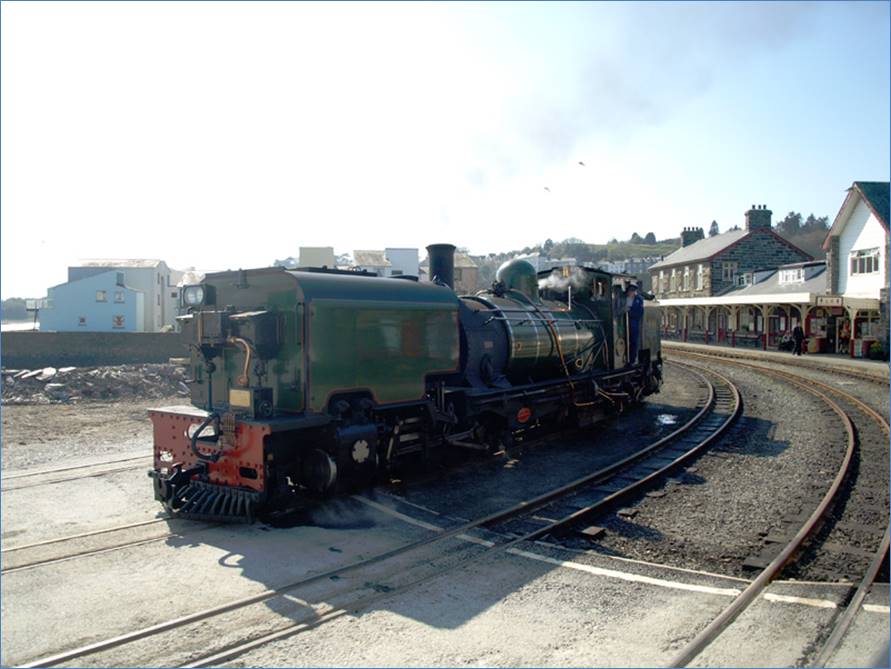
Beyer-Garratt
No. 143 waits at Porthmadog Harbour before taking its
train to Caernarfon, March 2012
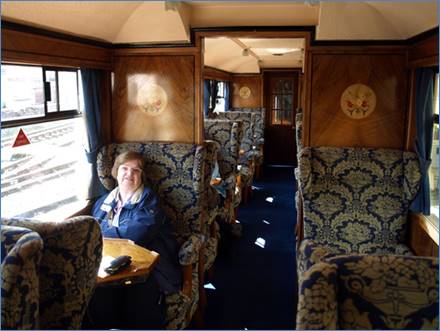
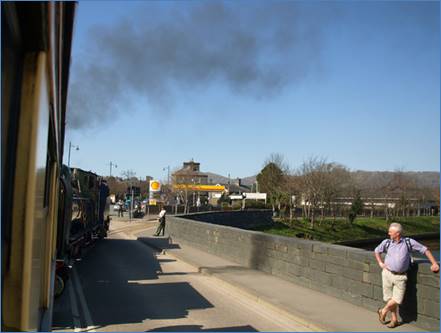
Inside Pullman Car Bodysgallen Setting
off across Britannia Bridge, Porthmadog
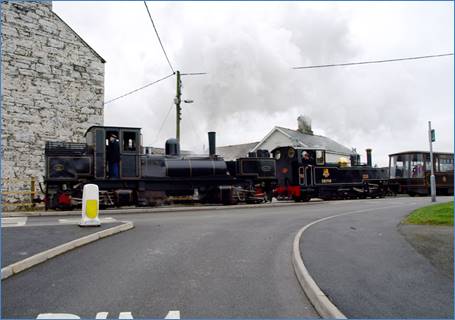
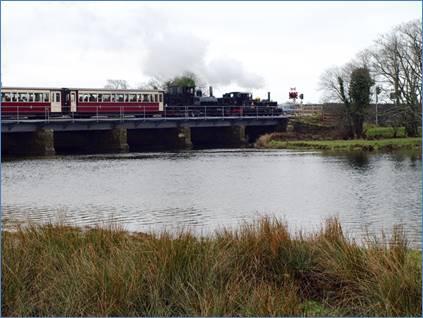
Threading the
streets of Porthmadog, and crossing the River Glaslyn
at Pont Croesor (February 2011)
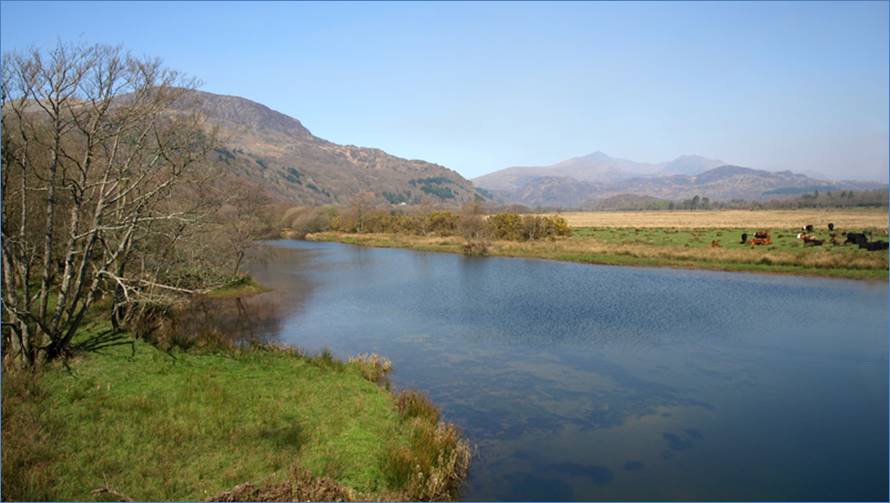
View from the
train about to cross the River Glaslyn at Pont Croesor,
with Snowdon in the distance (March 2012)
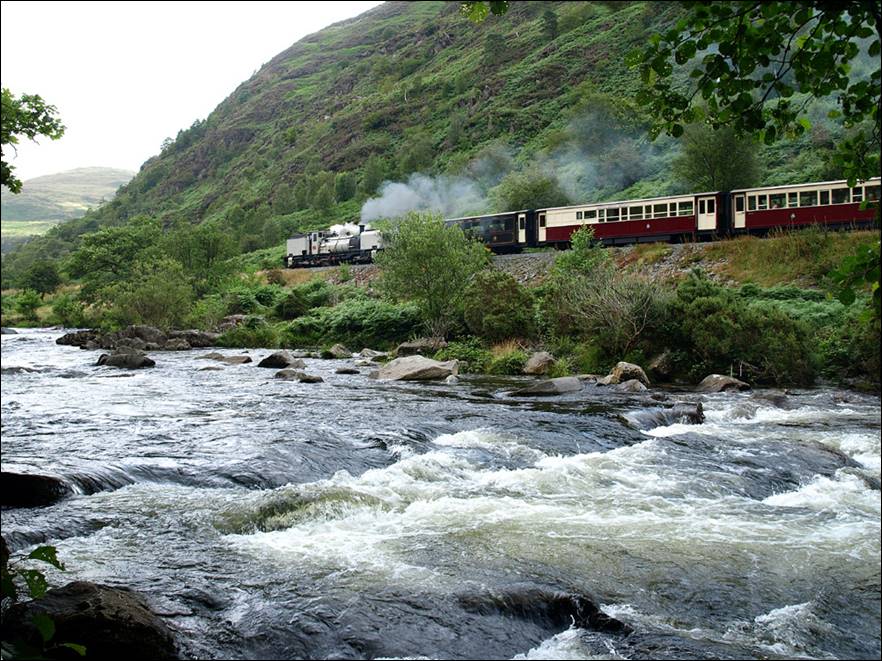
Beyer-Garratt
no. 87 heads through the Aberglaslyn Pass towards Beddgelert and Caernarfon in July 2009
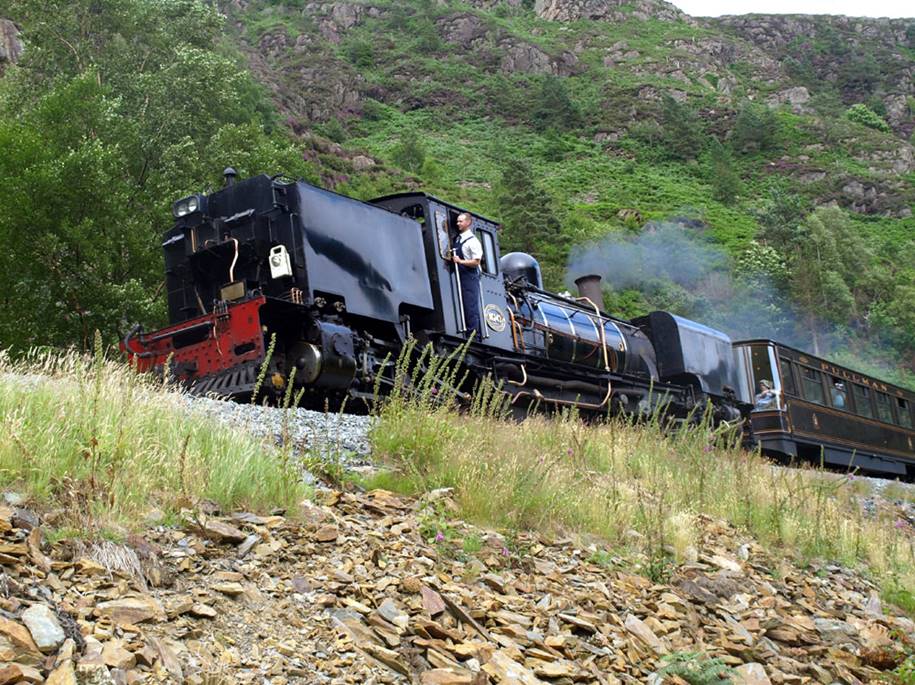
A close up of no.
143, built in Manchester in 1958 for South African Railways and one of the last
batch of steam locomotives built by Beyer Peacock.
Coupled next to 143 is the Pullman Observation Car which gives fine
views of the line, especially when at the rear of the train. The railway employs two further Beyer-Garratt
locomotives, 87 and 138, also re-patriated from
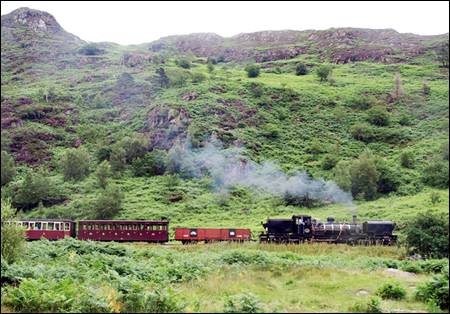
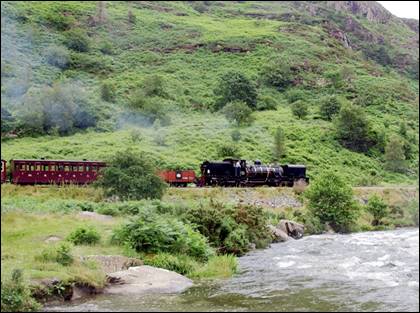
No. 143 heads
south from Beddgelert towards Aberglaslyn
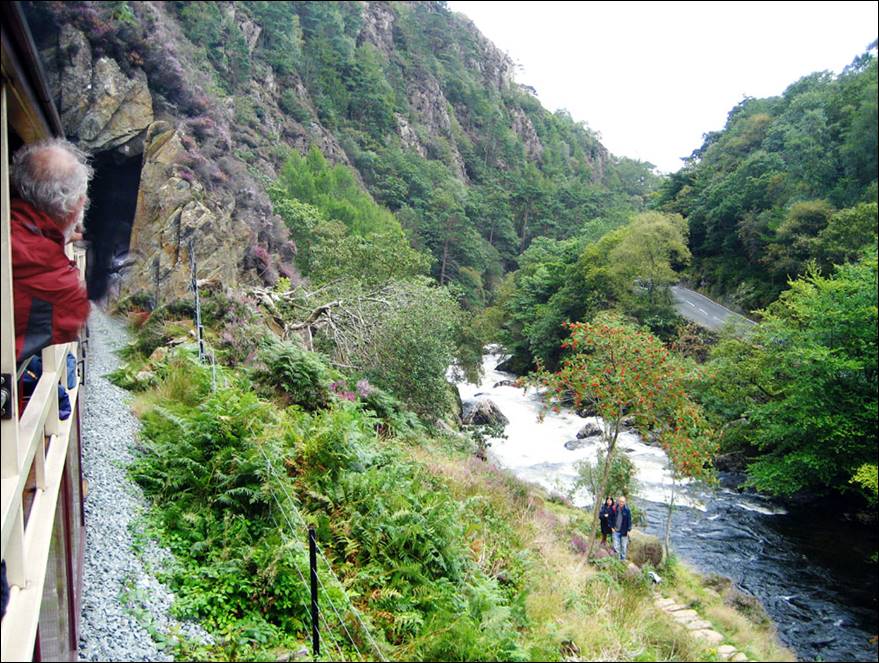
The view from a
train heading south into one of the tunnels in the
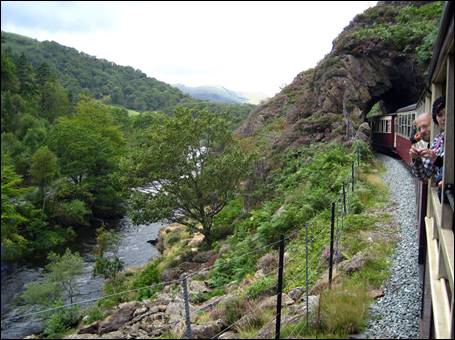
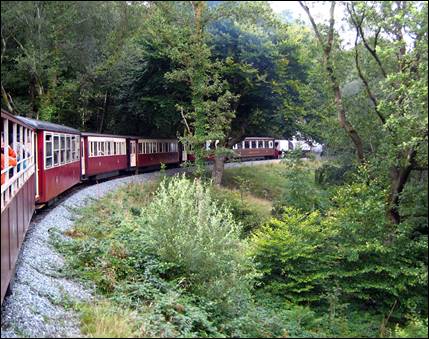
The view from a Caernarfon-bound
train in the
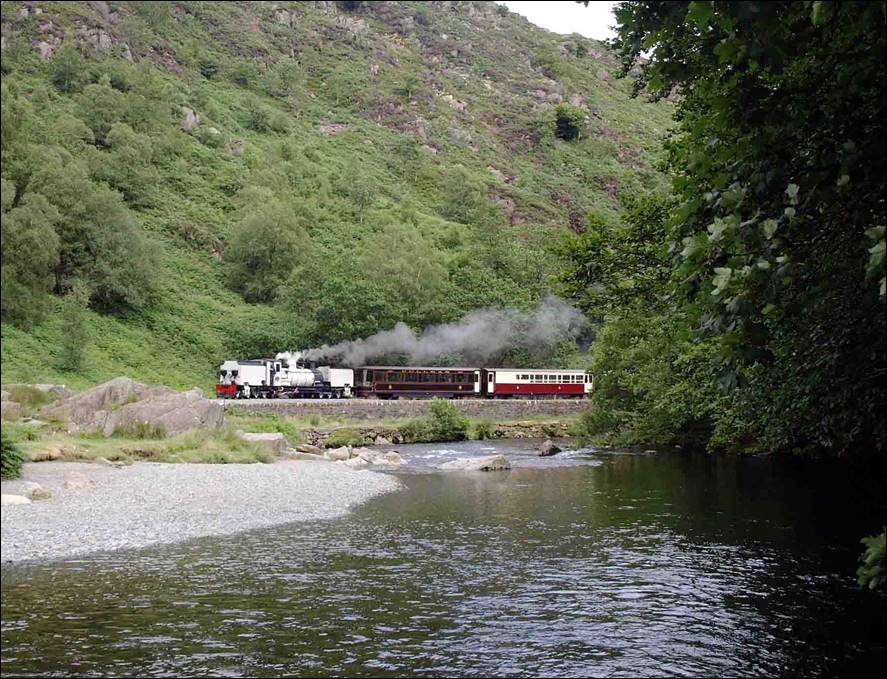
No. 87 alongside
the River Glaslyn with a train for Caernarfon
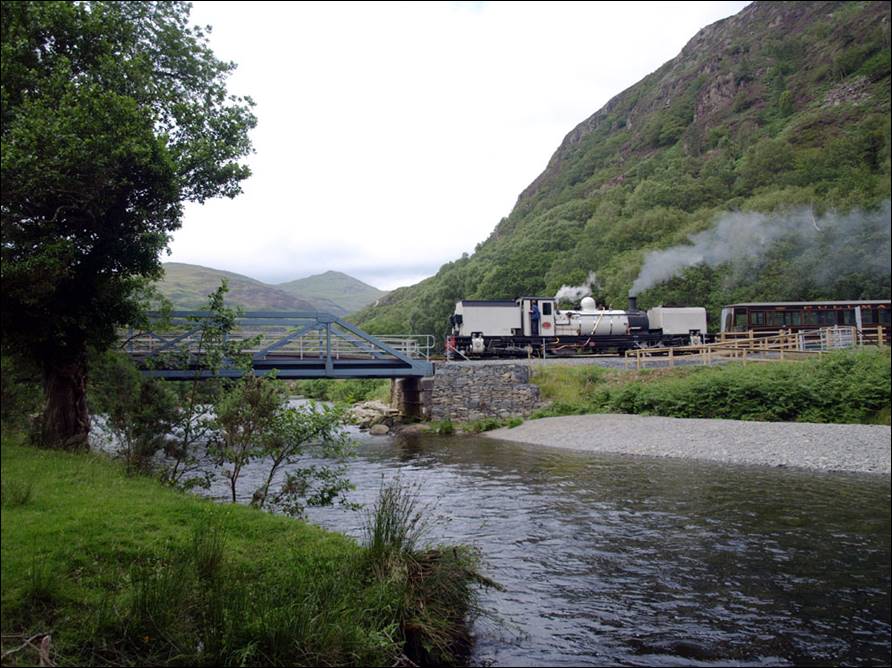
No 87 approaches
the bridge over the River Glaslyn, a few moments after the previous photograph
was taken.
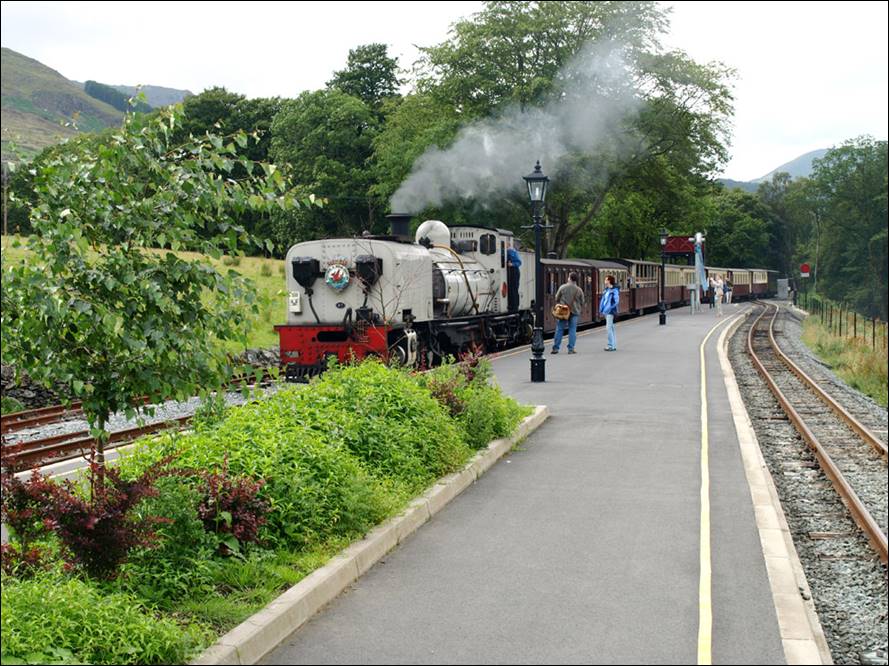
No 87 enters Beddgelert station with a train from Caernarfon.
The first
carriage is a replica of those which operated on the line from the 1890s until
closure in 1936. The second vehicle is
a modern Ffestiniog Railway carriage and the rest
were specially built for the re-opening of the Welsh Highland line.
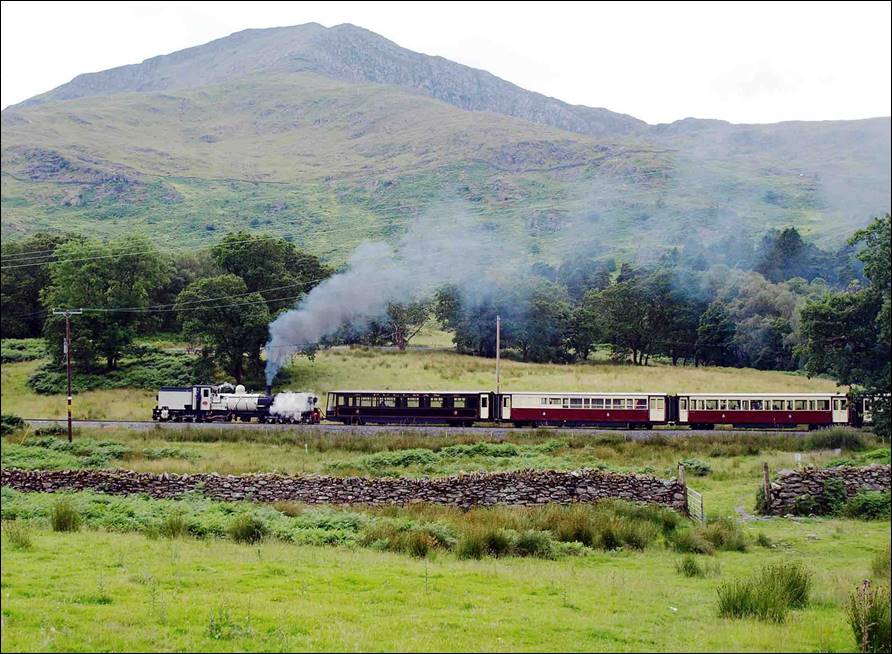
No 87 climbs
away from Beddgelert with a train for
Caernarfon. The train is on the first
of the reverse curves and is actually pointing away from Caernarfon! Moel Hebog (2566’) looms above the train.
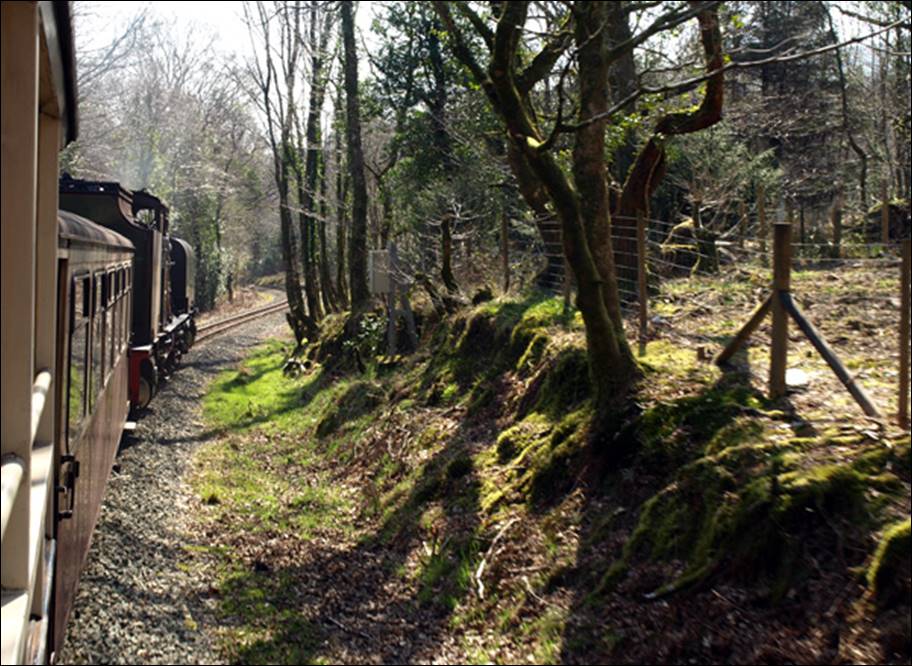
In Beddgelert forest (March 2012)
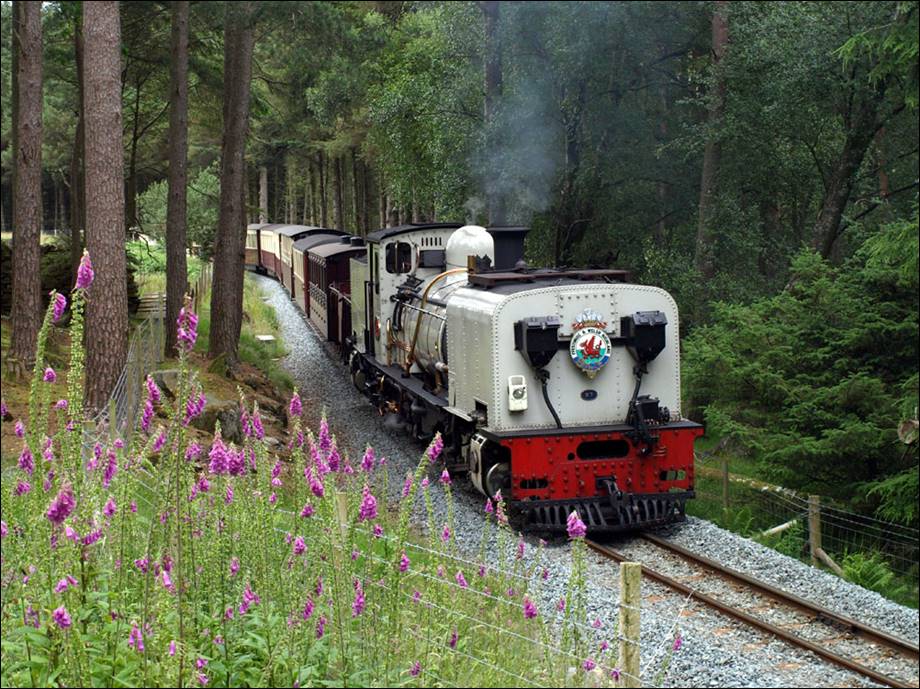
87 with a train
from Caernarfon enters the reverse curves as it approaches Beddgelert
(July 2009)
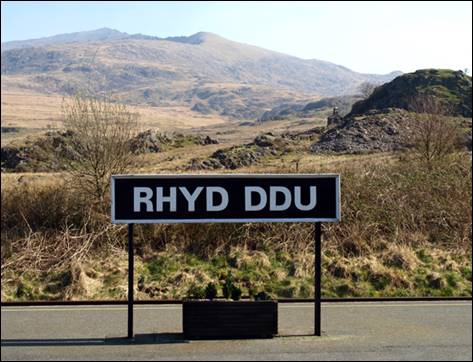
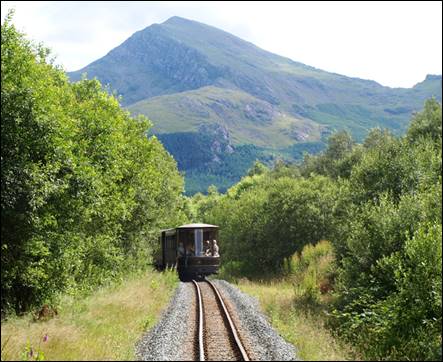
Left: Snowdon, seen from the platform at Rhyd Ddu
Right: A view down the line from the crossing, showing the
observation car at the rear of the train.
Moel Hebog is in the
background.
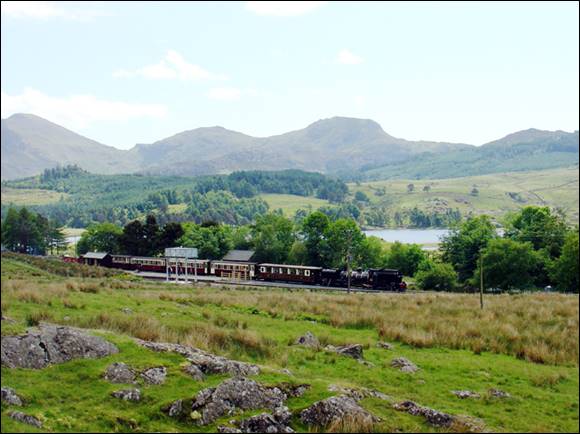
Left: A couple of years earlier, in 2007, when Rhyd Ddu was the terminus: 143 waits with its train for Caernarfon.
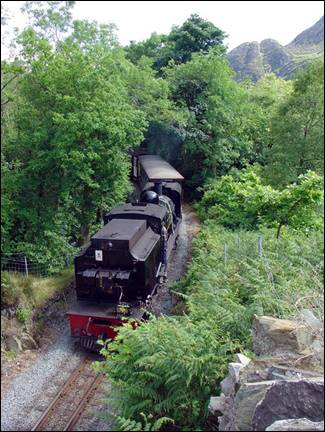
Right: The same train near
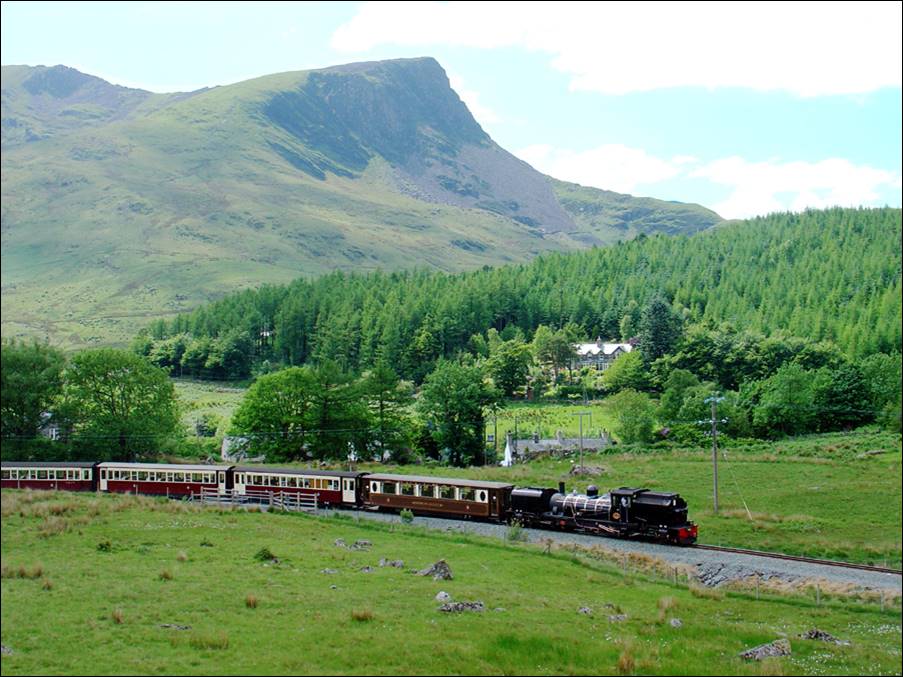
143 leaves Rhyd Ddu with a train for
Caernarfon. Mynydd
Mawr is in the background.
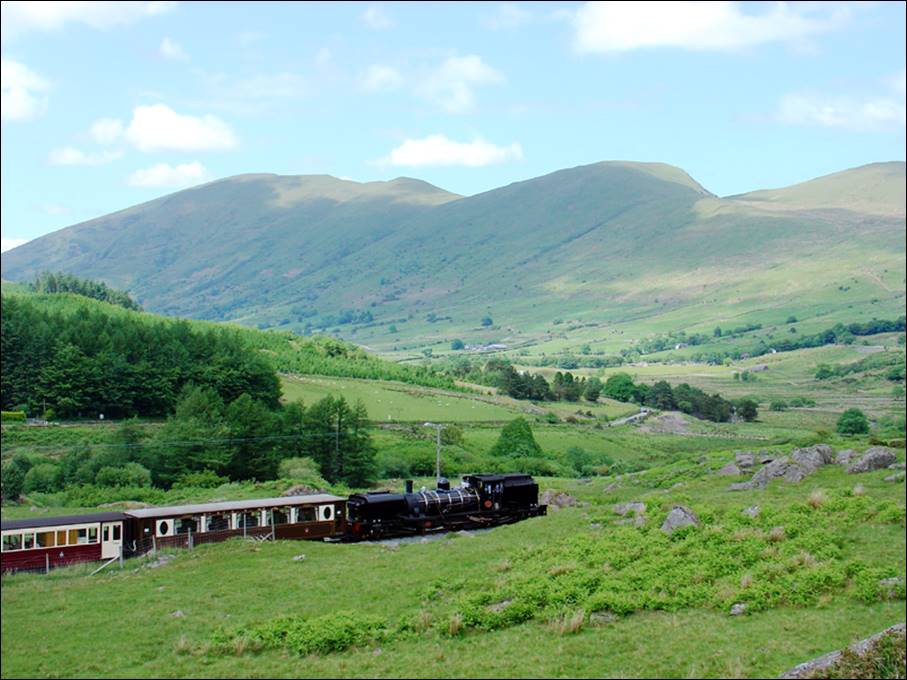
The same train
from the same view point, a few moments later, looking down the valley towards
Caernarfon.
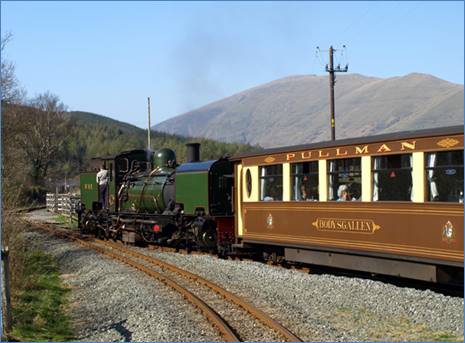
Left: 143 sets off from Rhyd
Ddu, bound for Caernarfon in March 2012.
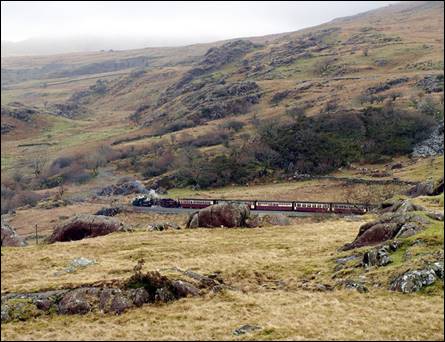
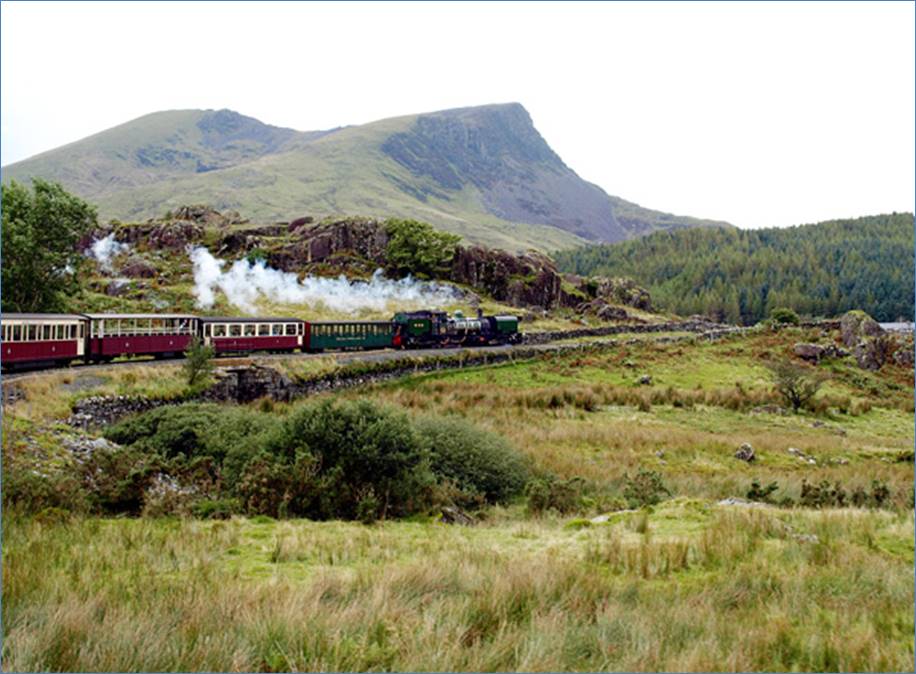
Right: A train bound for Caernarfon in a wintry
landscape near Rhyd Ddu in
February 2011.
The view from a
train bound for Porthmadog as it approaches Rhyd Ddu in September 2012.
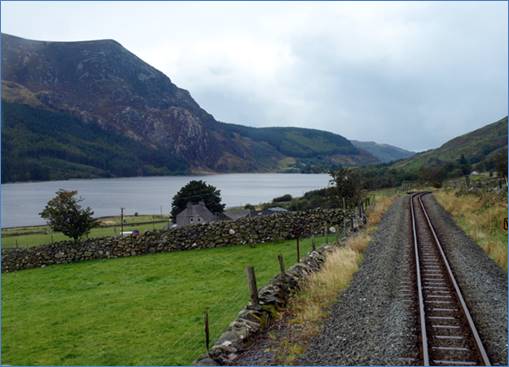
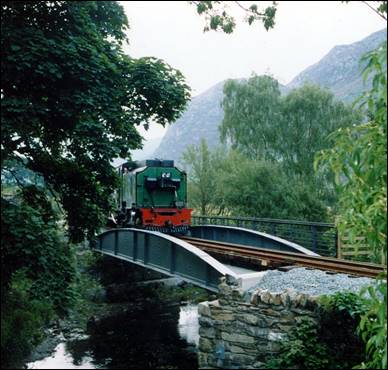
Left: Llyn Cwellyn, seen from the rear of a train bound for Porthmadog
Right: A train for Caernarfon, about to cross the
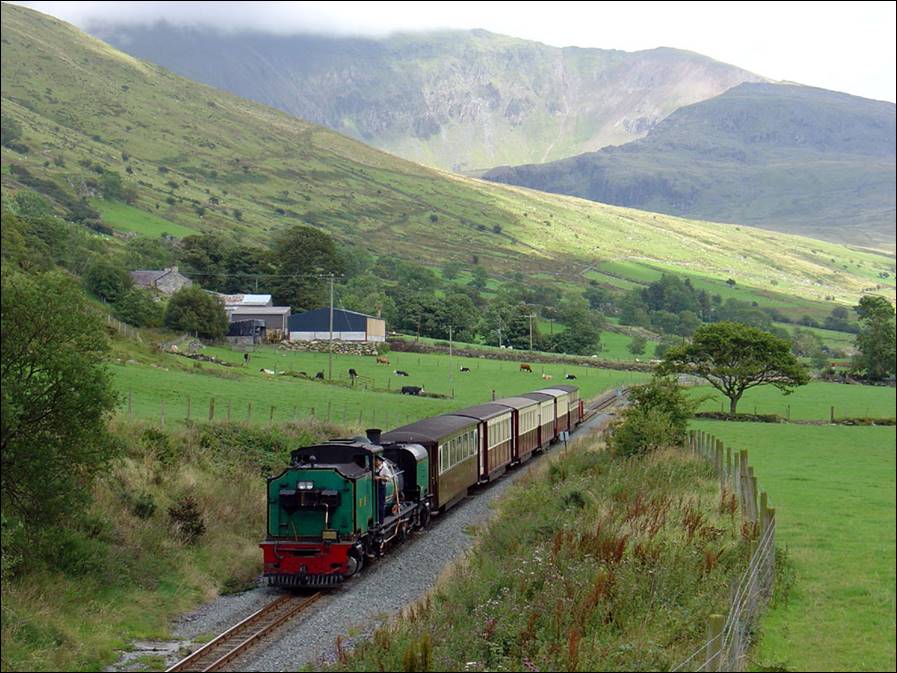
With
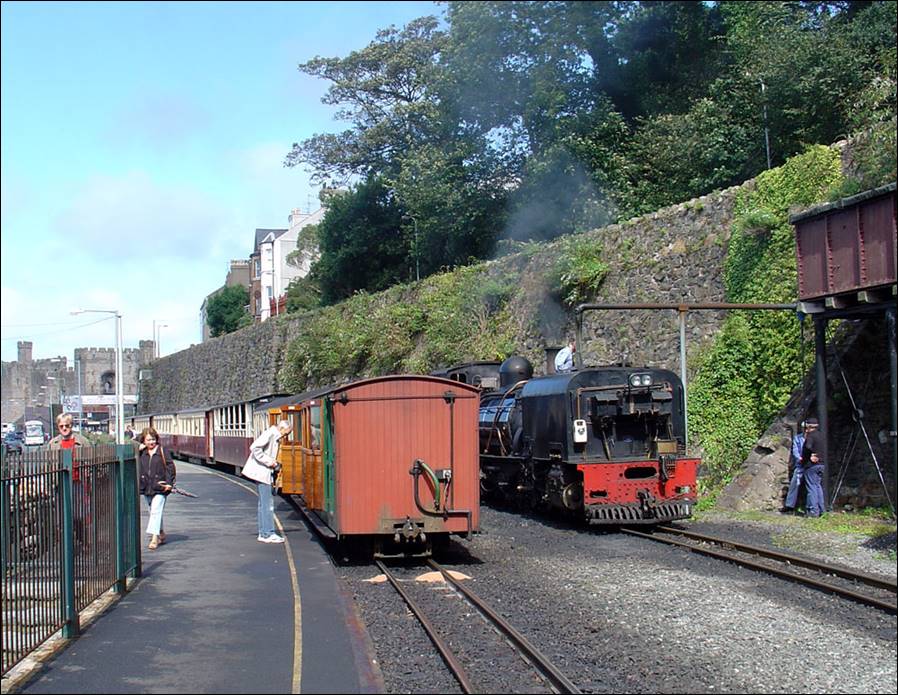
Back at
Caernarfon, 143 takes water before setting off with a train for Beddgelert and Aberglaslyn.
Caernarfon
Castle can be seen in the background.
(August 2009)
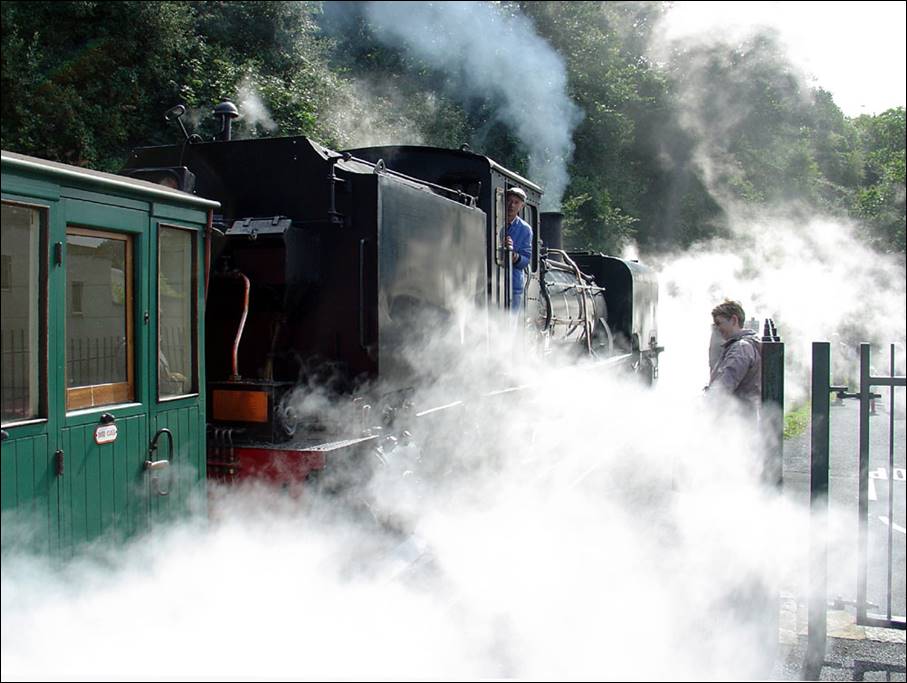
The driver opens
143’s cylinder drain cocks as the loco starts its train out of Caernarfon.
While in
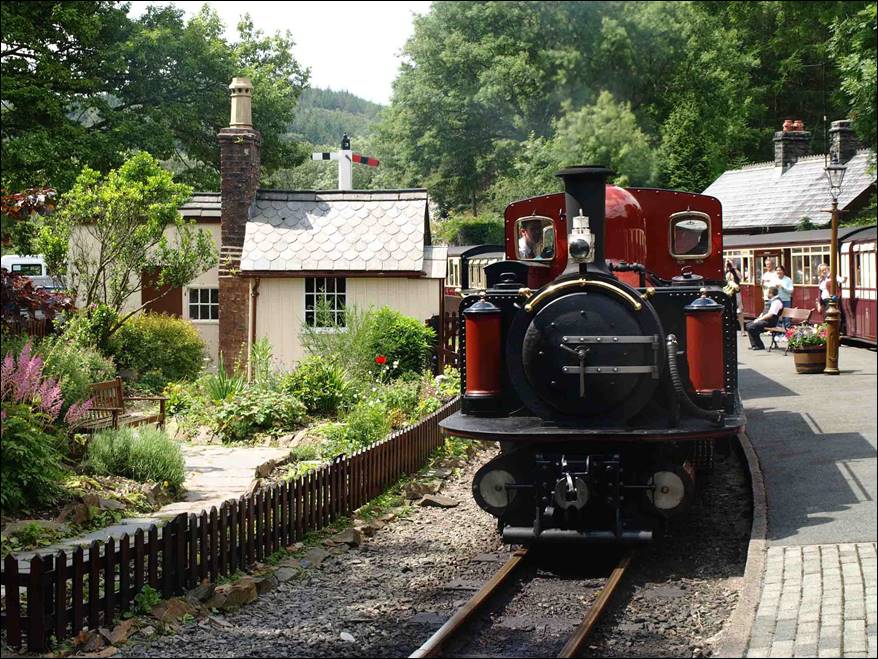
David
Lloyd George arrives at Tanybwlch with a train from Porthmadog to Blaenau Ffestiniog
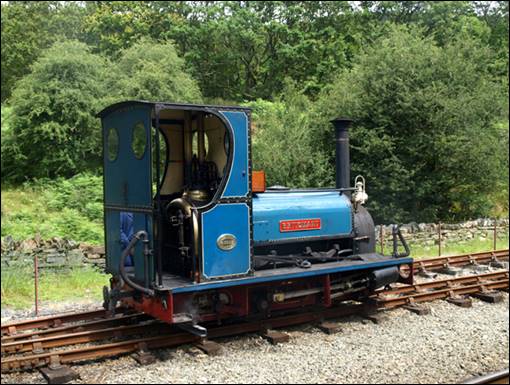
Left:
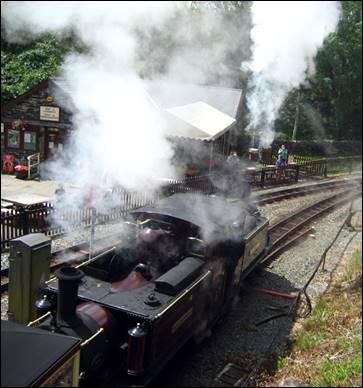
Former
quarry shunting locomotive Britomart (named after a character in Spenser’s Faery Queen) waits in a siding at Tanybwlch
Right: Merddin Emrys starts out of Tanybwlch
with a train for Porthmadog
Scenes on the Welshpool & Llanfair Railway
Photographs
from August 2009 with a glance back to the line in June 1956, over fifty years
previously
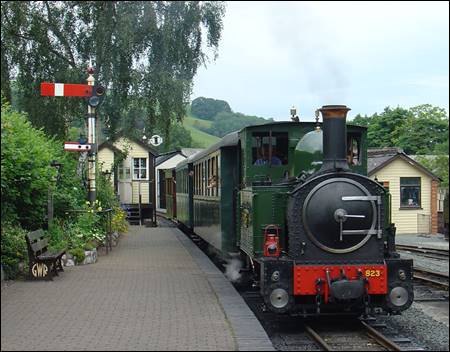
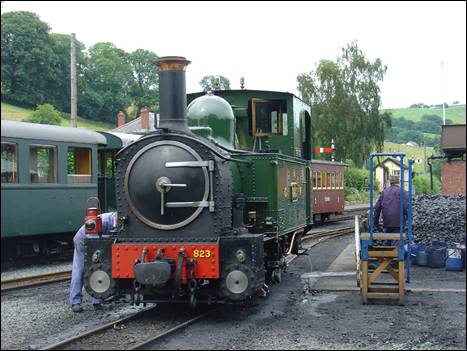
Llanfair
Caereinion:
GWR 823
“Countess”, built for the opening of the line in 1903, arrives with a train
from Welshpool and is then seen receiving attention in the station yard.
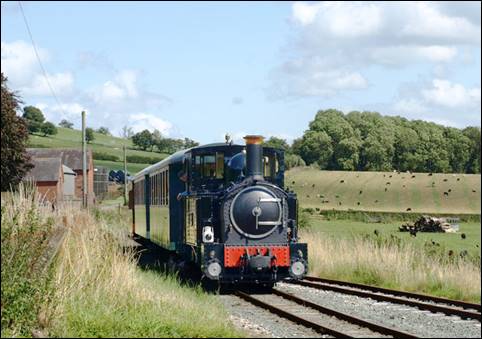
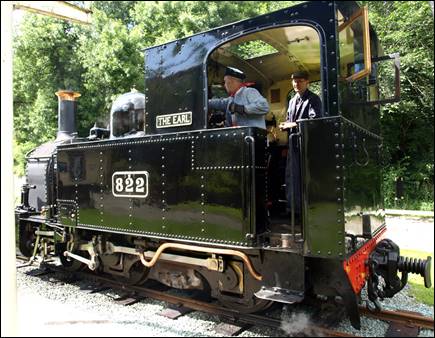
No 822
“The Earl”, the other original locomotive, seen with a train for Llanfair, in
typical local countryside, and at Welshpool after taking water.
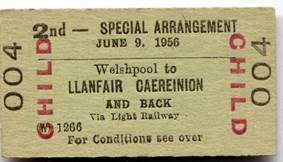
Back in June 1956 ….
The Welshpool &
Llanfair line was then still part of British Railways’ Western Region. Passenger services had been withdrawn in
1931, but freight was to continue until November 1956, despite the
inconvenience and cost of transhipping goods from standard gauge wagons to the
narrow gauge at Welshpool. It was
clear that such an arrangement was unlikely to continue indefinitely, and during
the 1950s special trains were occasionally run for railway enthusiasts wishing
to travel over the line while they could.
As there were no longer any passenger vehicles on the line, British
Railways kindly cleaned out coal wagons for use on such occasions. Passengers hoped for a dry day! I was lucky to be able to join one such
excursion just five months before the line closed. This necessitated a formal request at school
for permission to leave shortly before lunch on Saturday. Looking back, I am amazed I had the nerve to
ask for permission, but it was granted, enabling me to have a particularly
memorable afternoon travelling on the W&L.
On purely economic
grounds, the line might well have been closed several years earlier but
survived a little longer largely because it had a special place in the
affections of the local B.R. management.
This was fortunate, as by 1956 there was a trend to railway preservation
for which funds would not have been available in earlier years. After closure, the locomotives were
carefully stored in Oswestry works by B.R. until the line was re-opened by
preservationists in 1963.
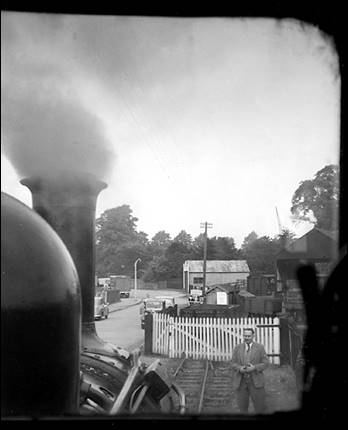
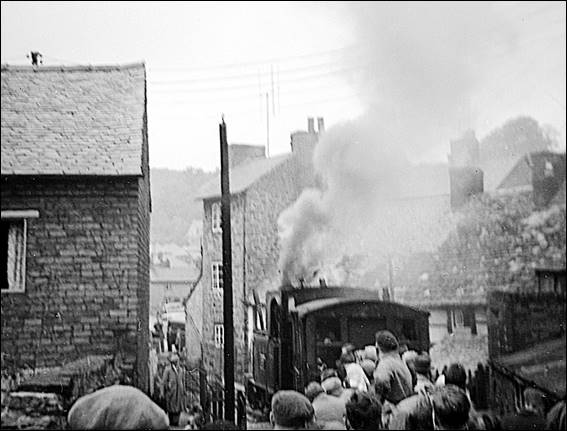
Left: The view from the cab of 822 at Welshpool. Beyond the gate are the exchange sidings
where coal is being transferred from standard-gauge wagons to those of the
W&L line, ready for the nine-mile journey to Llanfair Caereinion.
Right: The first mile of the line ran through the
streets and alleys of Welshpool: here is
a view from the train near Seven Stars.
This section did not re-open after preservation of the rest of the line.
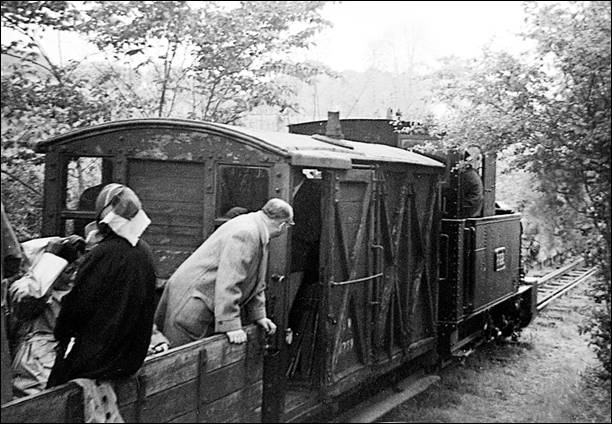
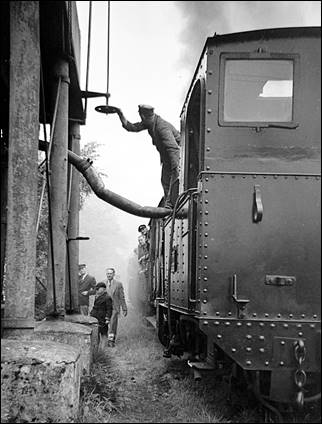
Left: A pause near the viaduct over the River Banwy, showing passengers perched in the open wagons.
Right: Taking water near Llanfair on the return
journey
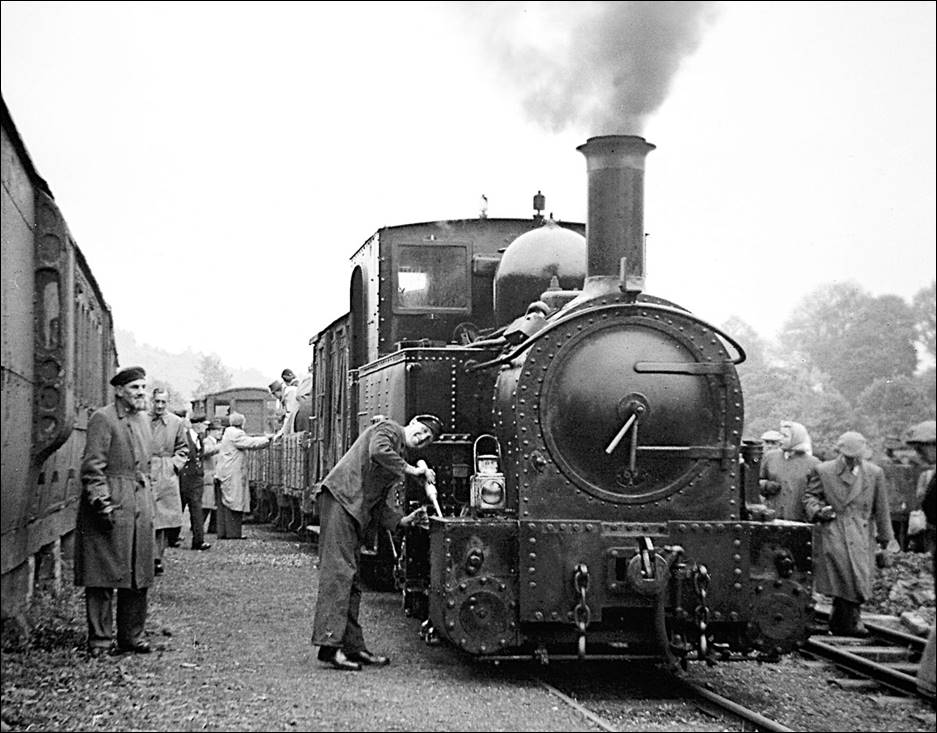
Passengers alight from
the train at Llanfair Caereinion on 9th June 1956, while the driver
oils the motion of 822.
Note that B.R. have
duly fitted an 89A (Oswestry) shedplate to 822’s
smoke-box door. The carriage body at
the left is not from a W&L vehicle, but is a former standard-gauge
carriage, brought to Llanfair by the G.W.R. for use as a store.
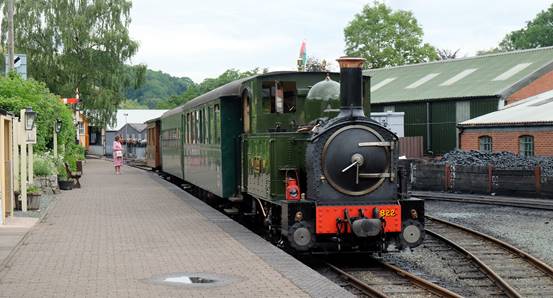
“The Earl” at Llanfair
in June 2023, photographed at much the same location as in June 1956 above.
For details of our other web pages, including many railway
photographs from the 1950s and early 1960s, please go to the Home Page using
the list at the left: (if the list is
not displayed, click here: index.htm)