The Darlaston Family Web Pages
This Web Page is Railways50yr.htm (Last revised 20th
February 2009)
N.B.
Photographs may take a while to download!
All photographs © Robert Darlaston
A. B.R. souvenir which cost me ten shillings in 1965!
Railways Fifty Years Ago
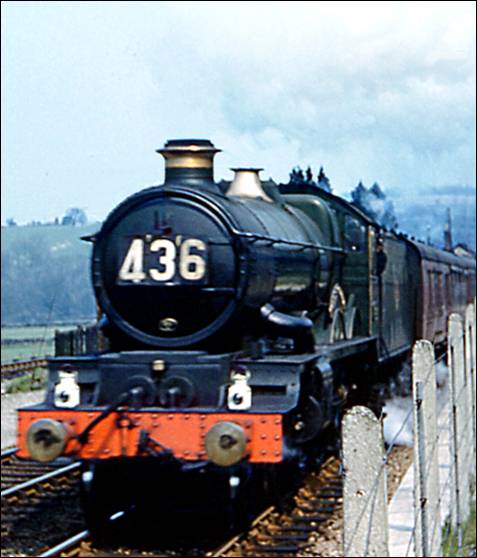
A memory of trains in the 1950s:
A
In the 1950s,
labour shortages meant that steam locomotives were often deplorably filthy, but
several loco sheds, especially on the Western Region of British Railways, made
a point of keeping a small stud of main line engines in “showroom condition”
for principal expresses. Notice the
burnished brass and copper and the sunlight reflected on the polished
paintwork. Even the buffers have been
polished, but having come into contact with other rolling stock, have lost most
of their shine. This splendid appearance
is a credit to the cleaners of Cardiff Canton depot, where the locomotive was
allocated. It was a joy in those days
to watch a Great Western express pass by:
the locomotive and its train (especially when in the old G.W.R.
chocolate and cream carriage livery) complemented the landscape which it
traversed, quite unlike most modern trains which flaunt a garish colour scheme
at variance from the countryside which they traverse.
Contents:
West Midlands, Wales
and the South and Southwest;
also the last Slip Coach
1953: 5900 and 6840 at Tyseley loco
shed, Dean Goods 2474 at
1955: 9022 at Hatton; Talyllyn and
Ffestiniog
1956: Steam at Four Oaks, T9 at Hamble,”Terrier”
at Hayling
Island, Ventnor, 822 at Welshpool;
1957: Stechford, B1 at Castle
Bromwich, 5036 and 4108 at Acocks Green, Birmingham
Moor Street traverser, 7929 at Hatton North, Lickey Bank, Lyme
Regis, Weymouth Quay, City of Truro
at Birmingham Snow Hill, Swindon Works (incl 6017 and
4358);
1958: last train Abergavenny –
Merthyr, 9004 at Dovey Junction, Blaenau Ffestiniog GWR, Ruabon, last
train Longbridge – Halesowen, South Devon including
1463 at Brixham;
1959: Swindon Works (92202 under construction), 5048 on the Bristolian,
‘Super D’ 0-8-0 at Dudley Port, Jubilee,
unrebuilt Patriot
and Princess Royal at Stechford, New Street, 4573 at Cheltenham Spa St James,
Slip coach at Bicester with 6001.
My other railway pages can be accessed by clicking on the links below:
Railways.htm (Birmingham Snow Hill in 1953, Three West Midlands GW branches and South Wales in the 1950s)
Railways2.htm (Brecon and Mid-Wales; Somerset & Dorset, GWR and LSWR lines in Somerset, Devon and Cornwall: 1957-62)
Railways3.htm (the
Railways4.htm (Birmingham area LMR; Boston, Peterborough, and Lincoln; GWR in North Wales; the Southern: 1961-63)
Railways5.htm (the decline of steam; Southampton, Birmingham GW, North Wales,
Trams.htm
(the last days of
Tyseley.htm (scenes at Tyseley and on the line between Tyseley and Birmingham Moor Street)
WHRamdLlangollen.htm (the revived Welsh Highland Railway, plus the Ffestiniog, Welshpool & Llanfair and Llangollen lines)
If our Home Page is not listed to the left of this page, it may be accessed here: www.robertdarlaston.co.uk
Fifty Years Ago
Railway Scenes from 1953 to 1959
First: a selection from 1953 to 1956:
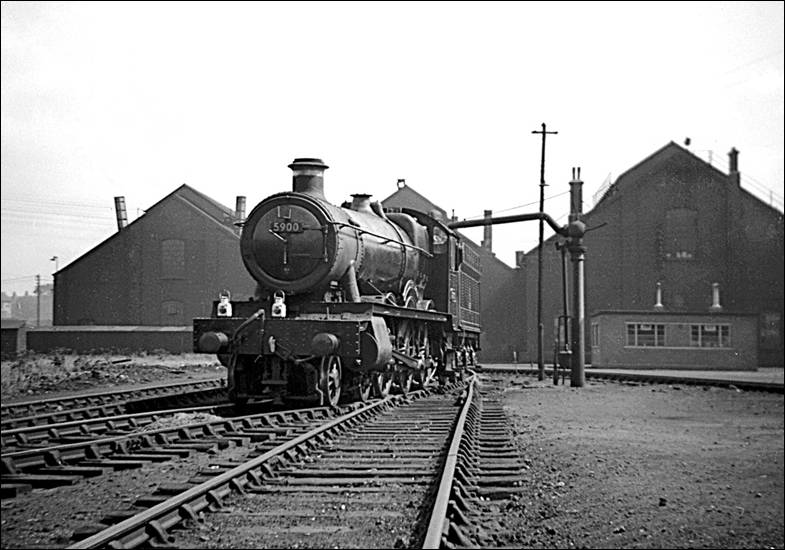
My very first railway
photograph: it’s
7th July 1953 and GWR 5900 Hinderton Hall
stands outside Tyseley shed, freshly cleaned,
prior to working and afternoon
express from Snow Hill.
This photograph was taken with my
brand new Kodak Brownie Box Camera on the occasion of a school tour of Tyseley shed.
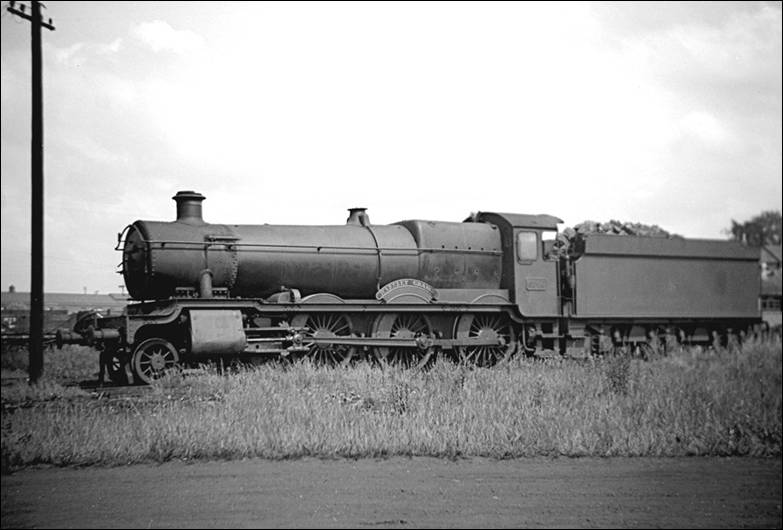
Another photo taken at Tyseley on 7th July 1953: 6840 Hazeley Grange at
the rear of the shed, adjacent to Warwick Road.
I soon learned to tell a Grange from a Hall by the raised frame over the cylinders.
The same afternoon 4052 Princess Beatrice was outside the shed,
prior to making its last journey to Swindon Works for breaking up: foolishly, I missed the chance of
photographing it, deciding that, unlike 5900 and 6840, it looked rather
scruffy.
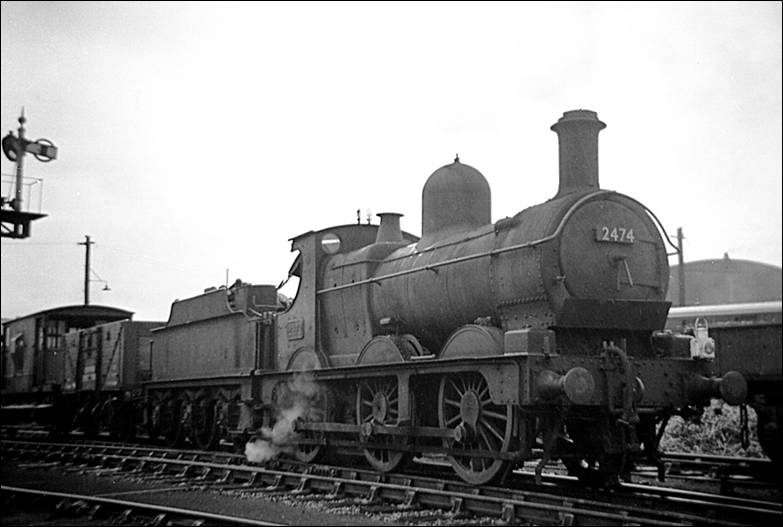
GWR 2474 at Hereford with a
short freight on 23rd July 1954. This loco was built in March 1896 and
withdrawn in April 1955.
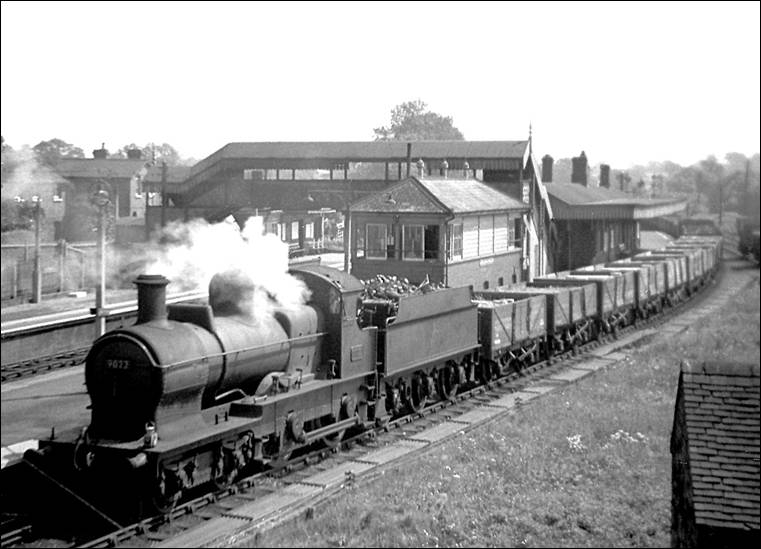
Another GWR survivor: 4-4-0 9022 at Hatton with a brick train from
the east
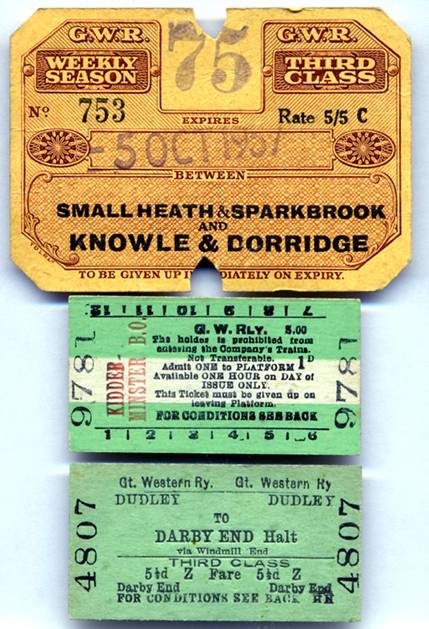
A GWR Weekly Season, a Platform
Ticket and a Third Class Single
A few Welsh narrow gauge
scenes 1953-56:
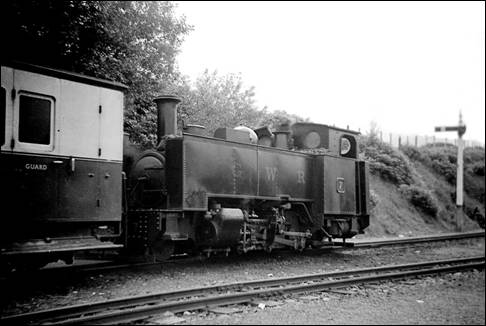
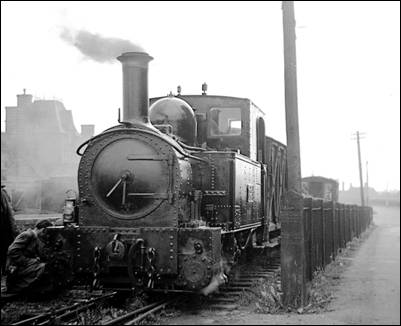
GWR 2-6-2T no 7 at Devil’s Bridge
with an afternoon train to Aberystwyth in August 1953.
GWR 0-6-0T 822 at Welshpool with a train on the freight line to Llanfair Caereinion in June 1956. Welshpool
main line station building is at the left.
Both these lines are now
preserved.
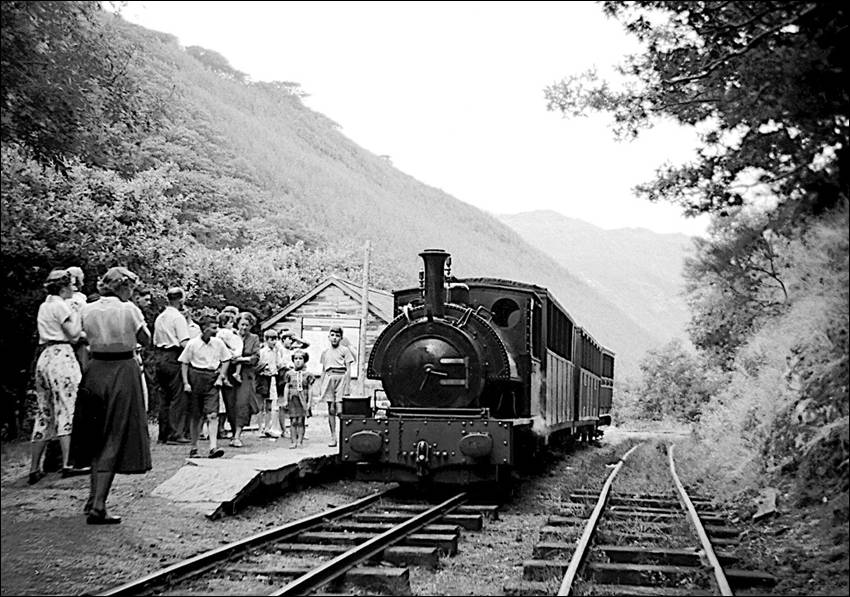
Abergynolwyn station on
the Talyllyn Railway which was the first line to be
preserved, being taken over by an enthusiast organisation in 1951.
The loco is no 3 Sir Haydn which operated on the Corris Railway until that line closed in 1948. The photograph was taken on 15th
August 1955.
It is salutary to realise that
the attractive young lady at the left, who seems to be taking a photo of the
two young children by Sir Haydn, is
now probably a silver-haired grannie.
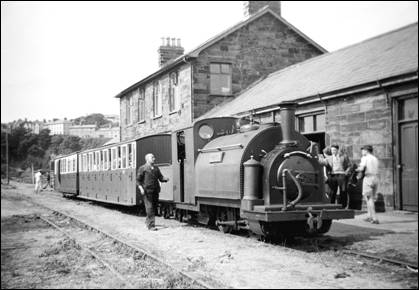
The Ffestiniog
Railway closed in 1946, but in 1955 enthusiasts started the long task of
restoring the line. Here no 2 Prince (built in 1863) stands with a
train at Portmadoc on 16th August 1955,
less than two weeks after the loco’s return to
service.
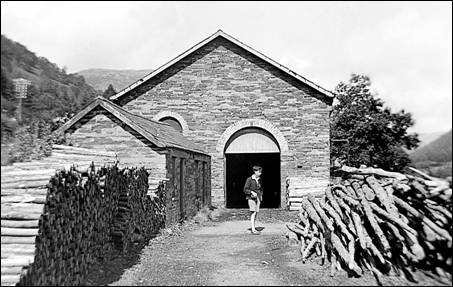
Maespoeth Junction engine shed on the Corris Railway in August 1955, seven years after
closure. The Forestry Commission has
taken over and young Darlaston is vainly searching for any railway relics which
might have been overlooked.
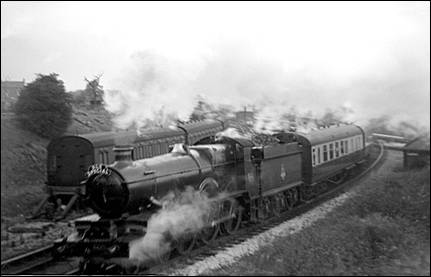
Two GWR 4-6-0s, shown up to advantage, with
paint and metalwork suitably polished:
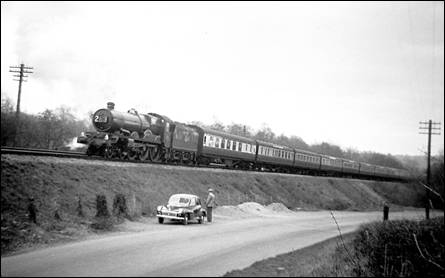
GWR 5050 Earl of St Germans lifts the heavy 8 am
One of the last GWR Stars, 4061
Glastonbury Abbey turns onto the
North Warwickshire line at Tyseley with an excursion
from Birmingham Snow Hill to
The start of steam’s decline:
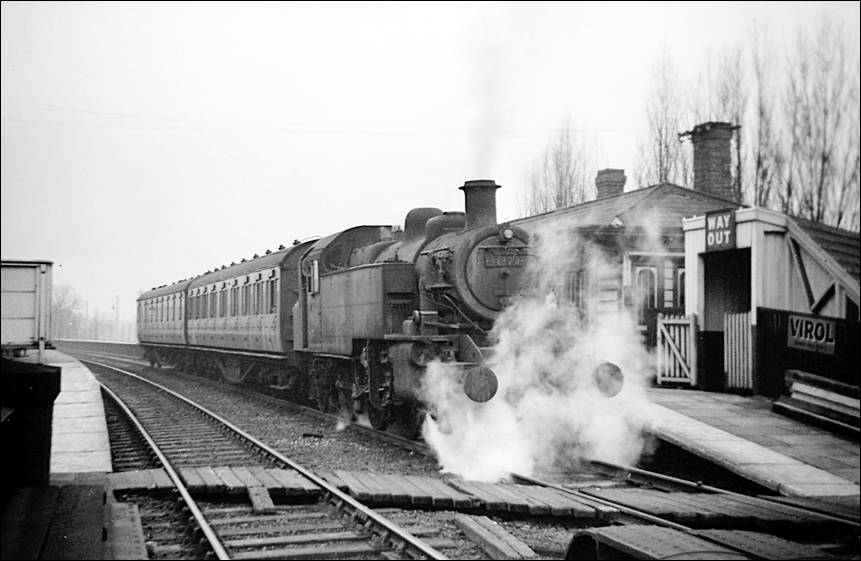
The first service in the
Ivatt 2-6-2T 41370 at Chester Road
with a Four Oaks to Birmingham New Street rail motor train on 25th
February 1956,the last day on which services were
steam operated.
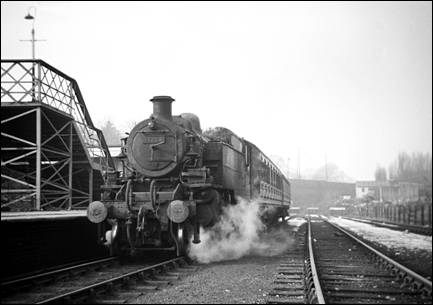
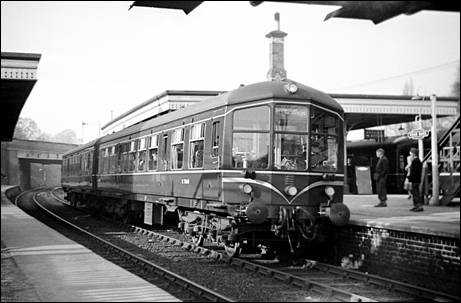
41224 in the bay at Four Oaks
with a train for Birmingham New Street.
A week later: a
A Southern Selection,
taken on the family’s annual holiday in 1956:
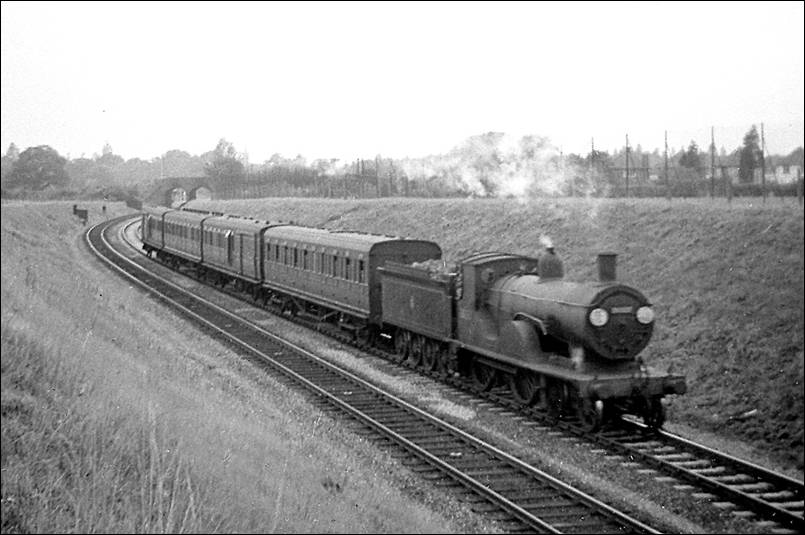
Ex-LSWR T9 no. 30537 near Hamble with the 5.15 pm Bitterne
to
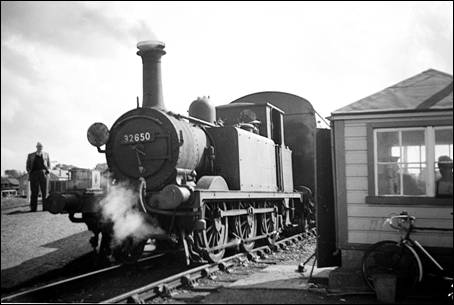
Ex-LBSCR “Terrier” no. 32650,
built in 1876, at
The loco is fitted with a spark
arrester for the protection of the timber viaduct across
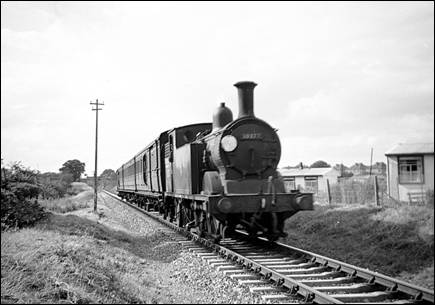
Ex-LSWR no. 30377 near Marchwood with the 4.8 pm Southampton Central to Fawley train on 3rd
September 1956. Note the post-war ‘pre-fabs’ at the right.
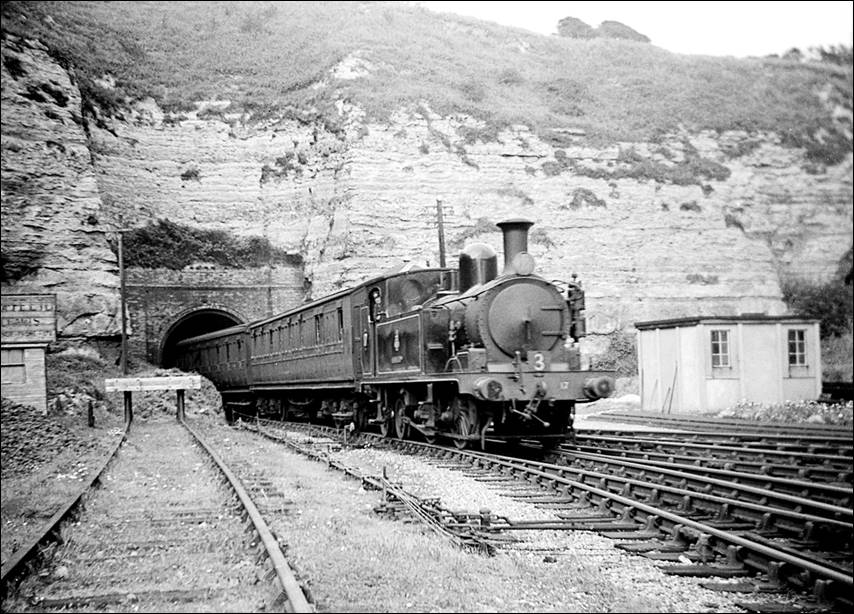
O2 class 0-4-4T W17 Seaview arrives
at Ventnor with an Isle of Wight Railway train from Ryde
Pier on 4th September 1956.
Next:
a yearly selection beginning in 1957:
We begin sequence early in
January at my local station, Stechford, on the old LNWR line from Birmingham New Street
to Euston.
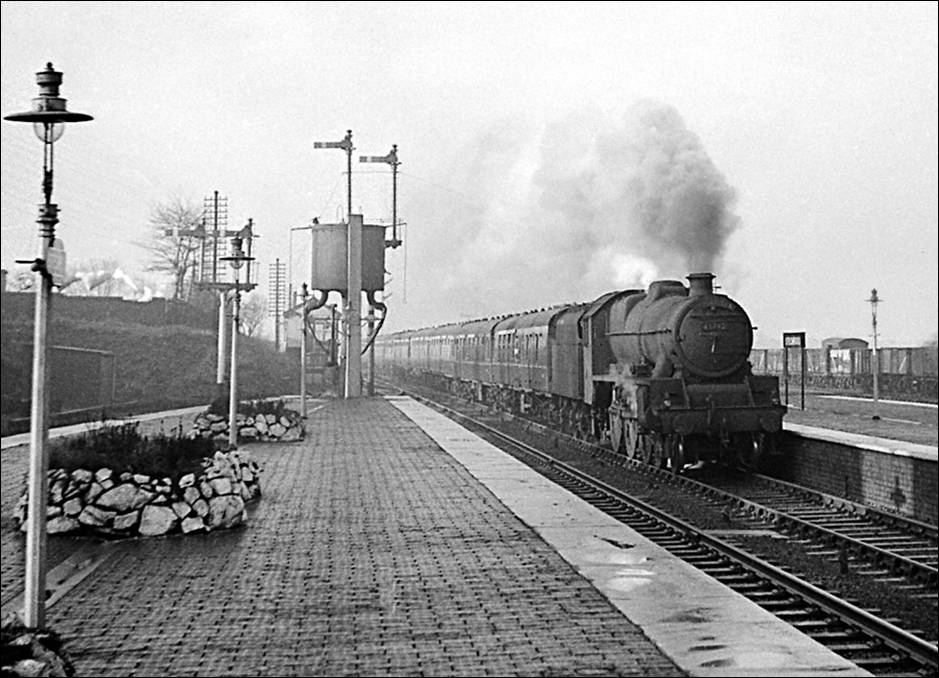
The up Midlander passes Stechford
behind 45742
Note the gas
light and the flower beds, the typical LNWR blue-brick platform, and also the
LNWR water tank at the platform end.
Washing blows
in a garden in Frederick Road and is about to be covered in smuts!
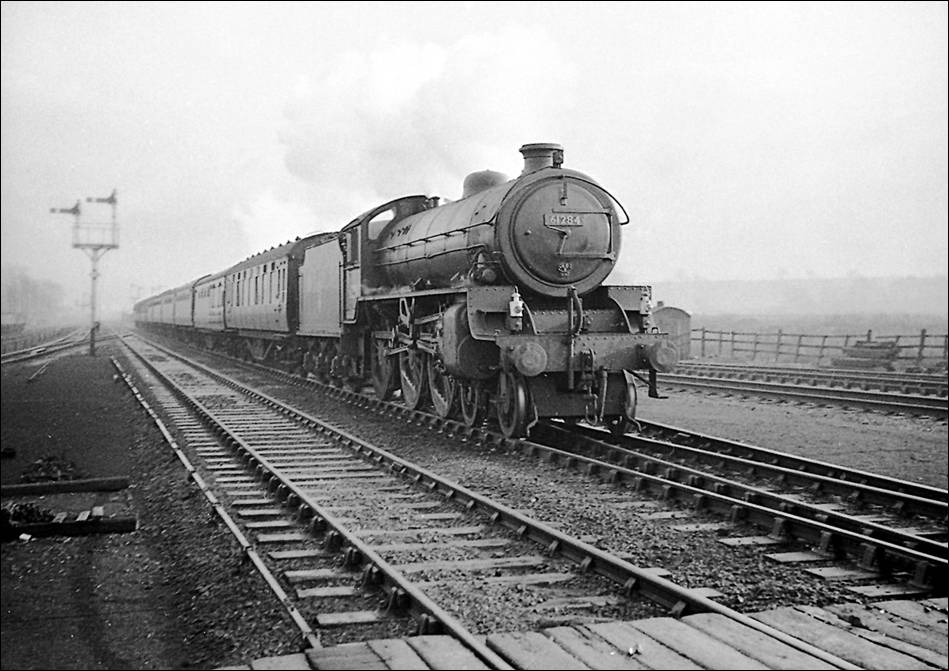
For railway
enthusiasts in the
=
= = = = =
Next,
views on the old Great Western Birmingham line. In June 1957 most suburban trains out of
Birmingham Snow Hill and Moor Street stations were switched to diesel
operation, so earlier in the year I made a few trips with friends, including
one to Hatton, to observe steam workings.
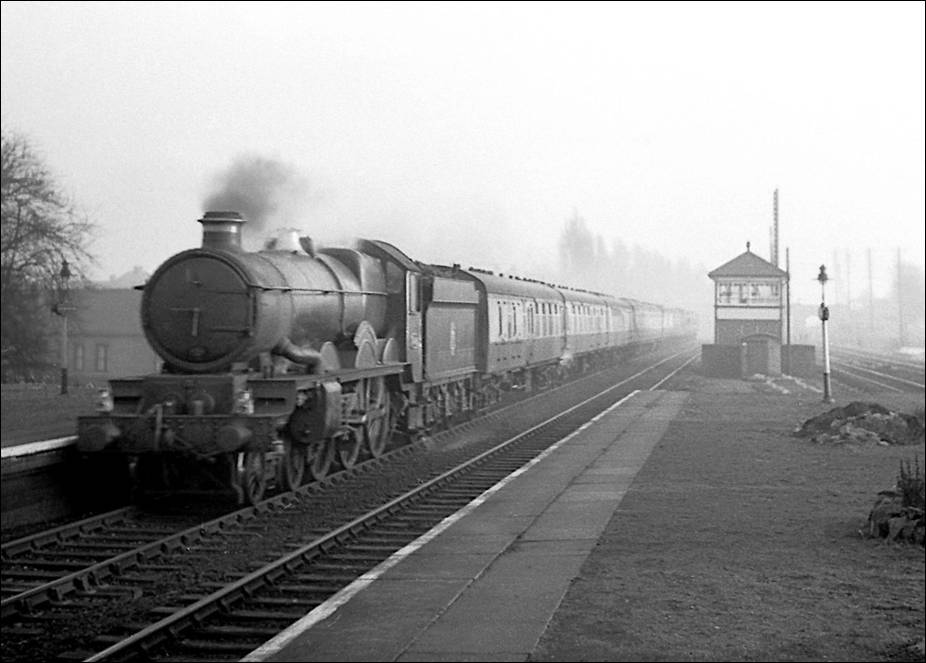
At Acocks
Green we see 5036 Lyonshall Castle (without a smokebox
numberplate) emerge from a January mist with the 9.18
On 25th
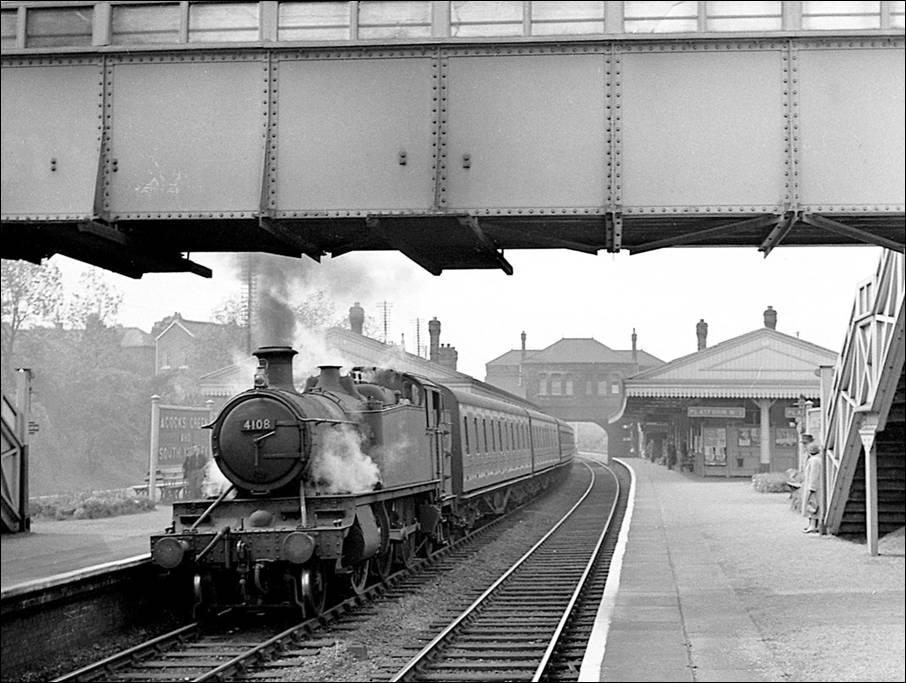
May 1957 GWR 2-6-2T 4108 pauses at Acocks Green with
a local from Moor Street to Leamington Spa.
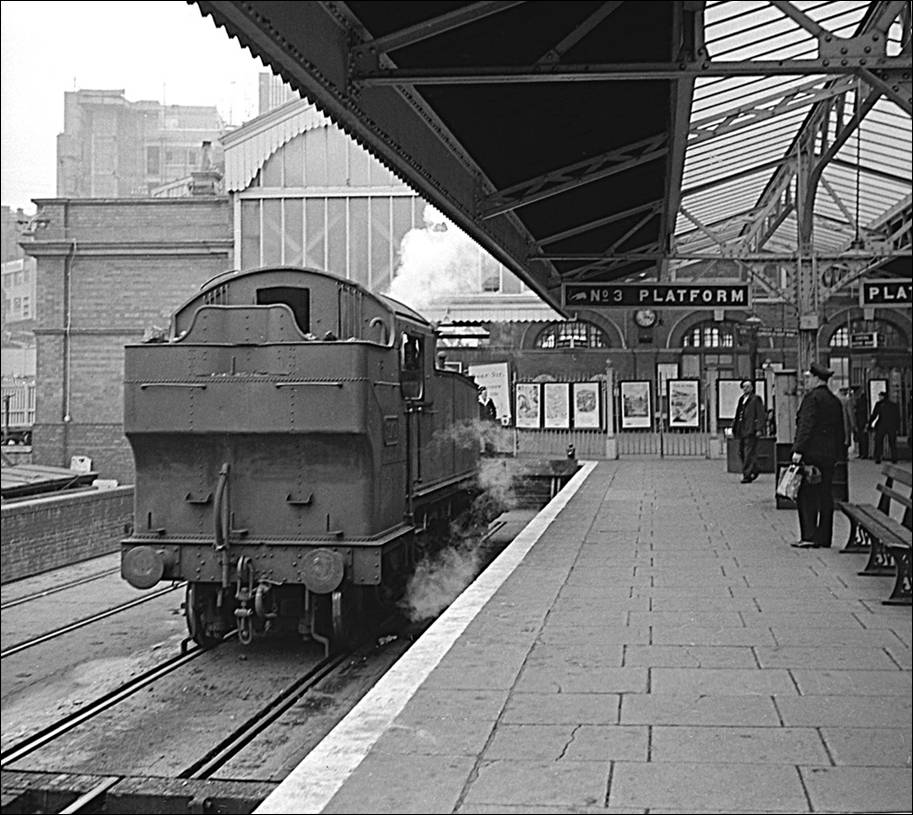
At Moor
Street, 3101 is seen on the loco traverser on
platform 3.
The traverser has long gone, but otherwise the view here today
is little changed.
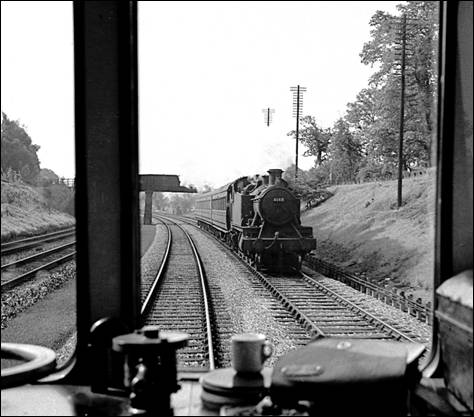
Left: En route to Hatton, the view near
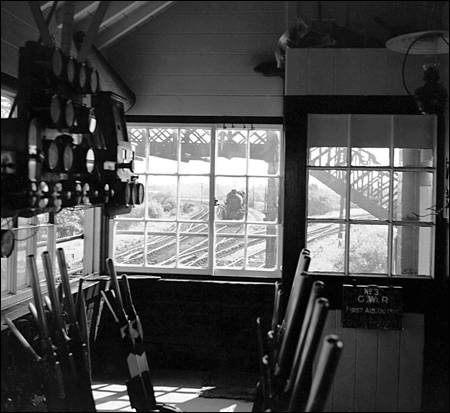
Right: The view inside Hatton North Junction signal
box with a down express approaching.
Note the GWR First Aid box mounted on the door.
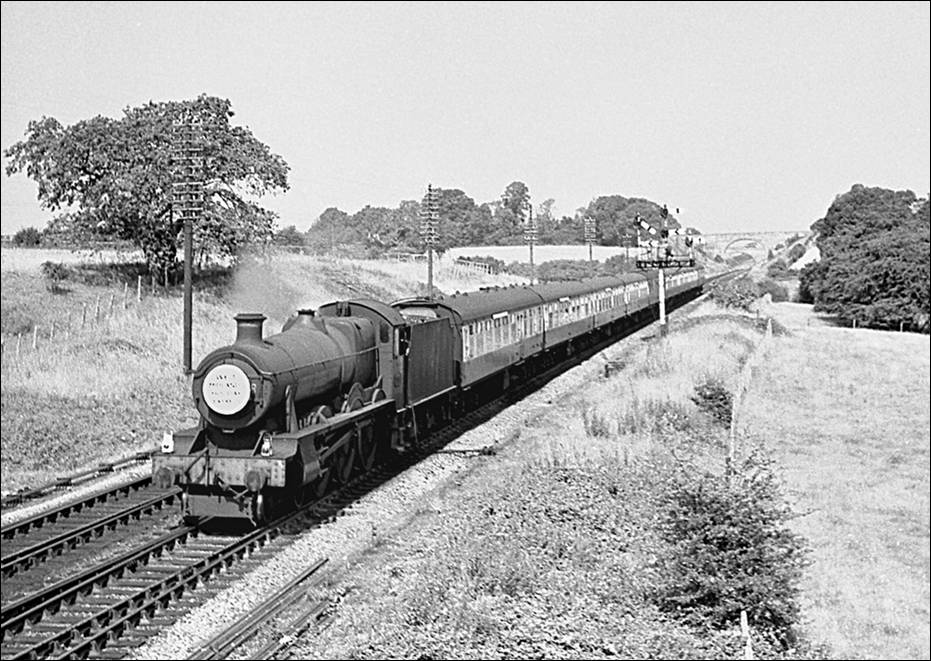
7929 Wyke Hall is about to diverge to the Stratford-upon-Avon
line at Hatton North Junction with the West Midlands Holiday Express from Snow
Hill to Porthcawl, also on 2nd August
1957. 7929 was the last of 330 Halls to be built and was then only six
years old.
=
= = = = =
There were also trips
locally on the London Midland Region lines from New Street, and here are a
couple of pictures on a Summer Saturday on the Lickey
Bank. Returning
holiday trains from the West Country queued south of Bromsgrove and were
admitted to the bank in turn. As
each one cleared the summit, so the next would leave Bromsgrove. Each train took about seven minutes for the
two-mile climb at 1 in 37. The train
engine would often take a rest for the climb, leaving the work to the former
G.W.R. pannier tank locos which by then banked most of the trains.
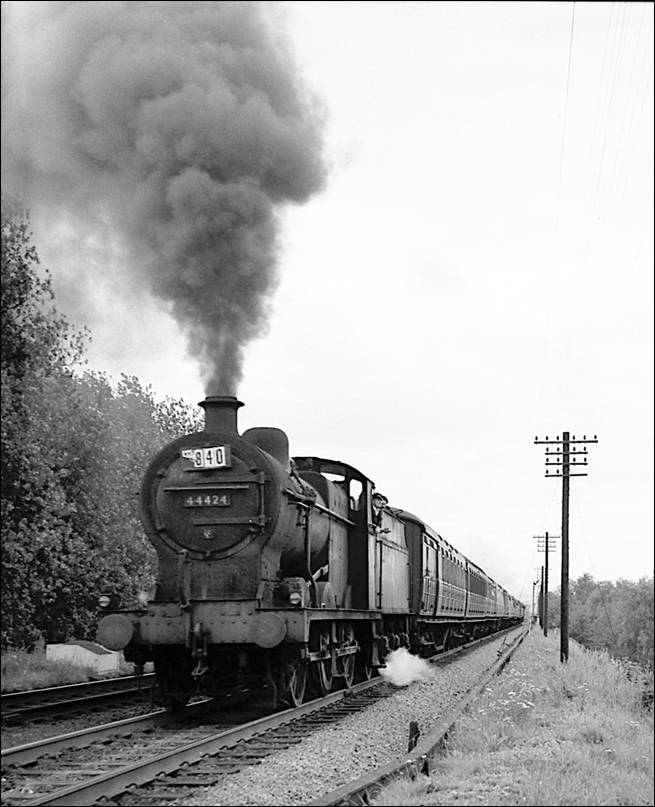
LMS 4F 0-6-0 44424 struggles
with a long train of holiday-makers returning from Bournemouth West to Nottingham
via the Somerset and Dorset line.
The fireman has piled coal onto
the fire in an attempt to build up steam so that this freight loco can keep its
heavy train moving – but they will be lucky to exceed 40 m.p.h., which won’t
please the Devonian express following
close behind!
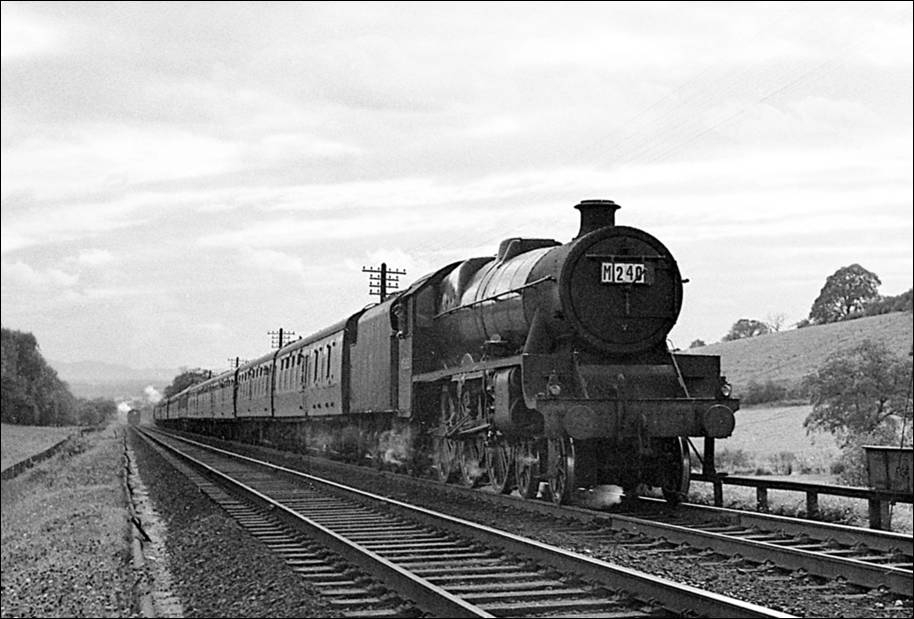
45663 Kempenfelt brings the northbound Devonian
(Paignton to Bradford Forster Square) up the bank
towards
Both photos were taken on
Saturday, 17th August.1957.
=
= = = =
The family summer holiday early
in June 1957 was spent in Dorset, giving me chance to see the elderly London
& South Western Railway 4-4-2T locomotives still working the Axminster – Lyme Regis branch, as well as having my first
encounter with the Southern Railway’s “air-smoothed” Pacifics. We also visited
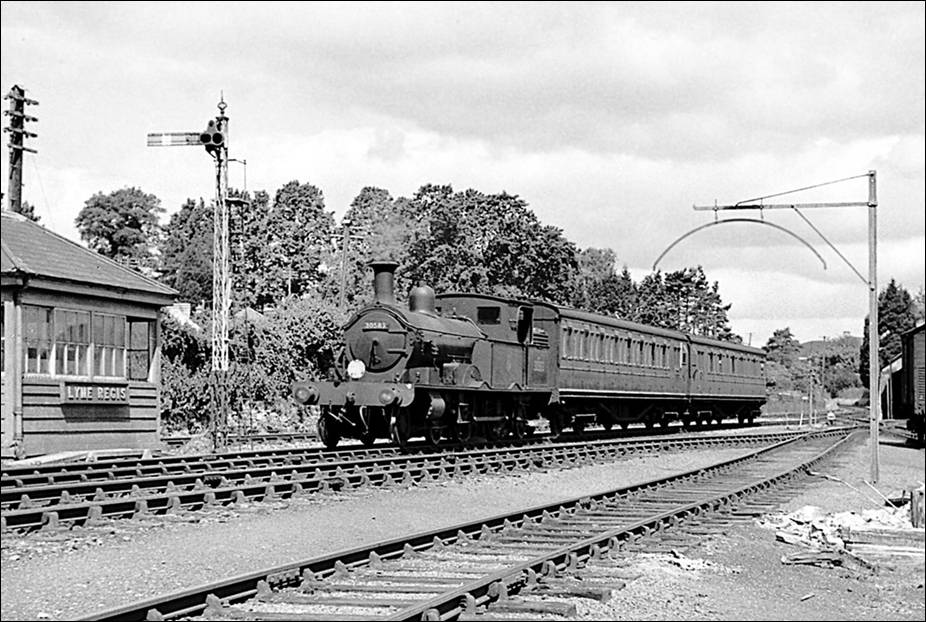
30583, built in 1885, arrives at Lyme Regis with the branch train from Axminster on 10th June 1957.
The branch line closed long
ago, but 30583 lives on at the Bluebell Railway in
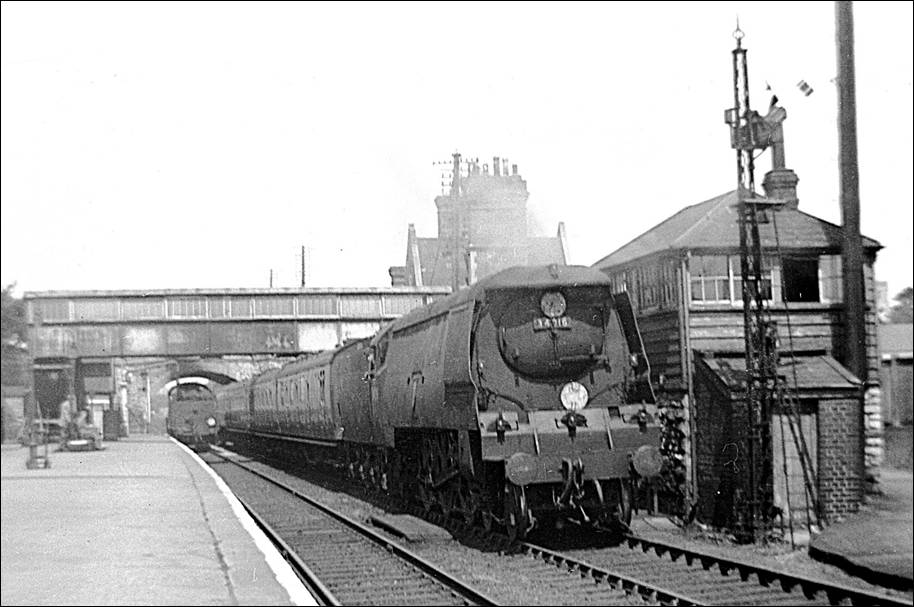
34016 Bodmin waits at Axminster with a
This engine was subsequently
rebuilt without the streamlined casing and is now preserved on the Mid-Hants
Railway
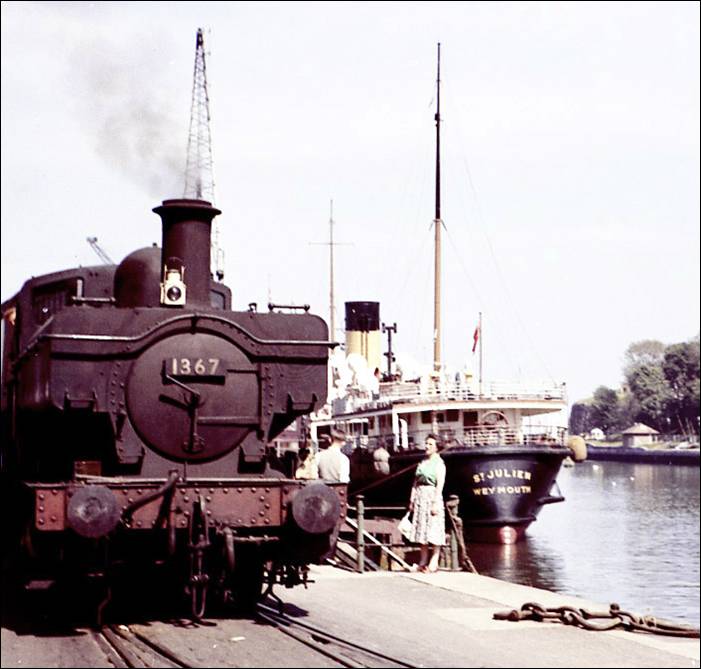
My mother watches as 1367
starts the Paddington boat train away from Weymouth Quay on 12th
June 1957 with the former GWR ship St Julien alongside
= = = = = =
Early in 1957 the Western
Region of British Railways removed from the
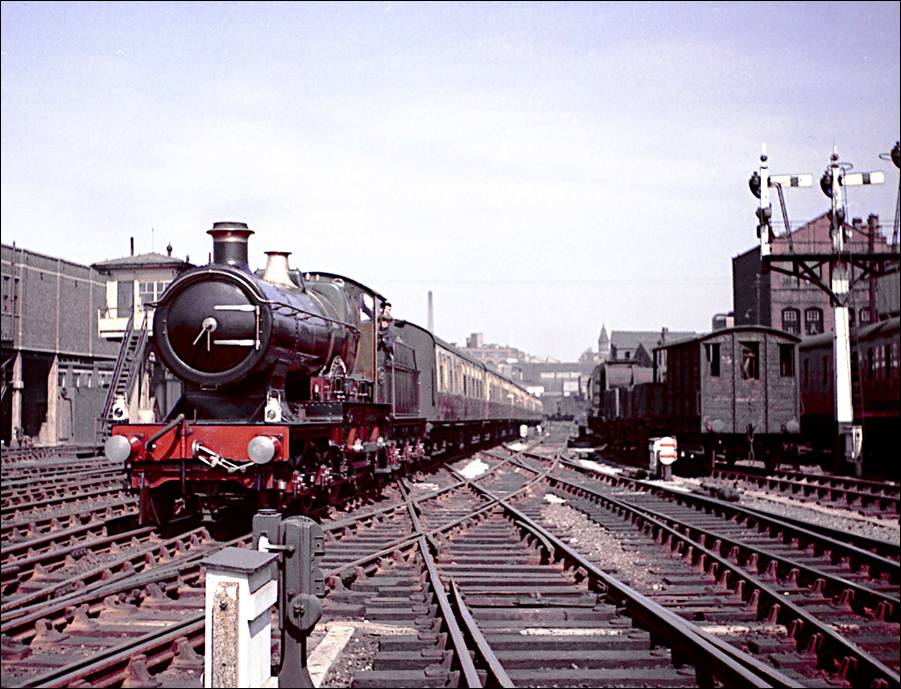
3440 City of
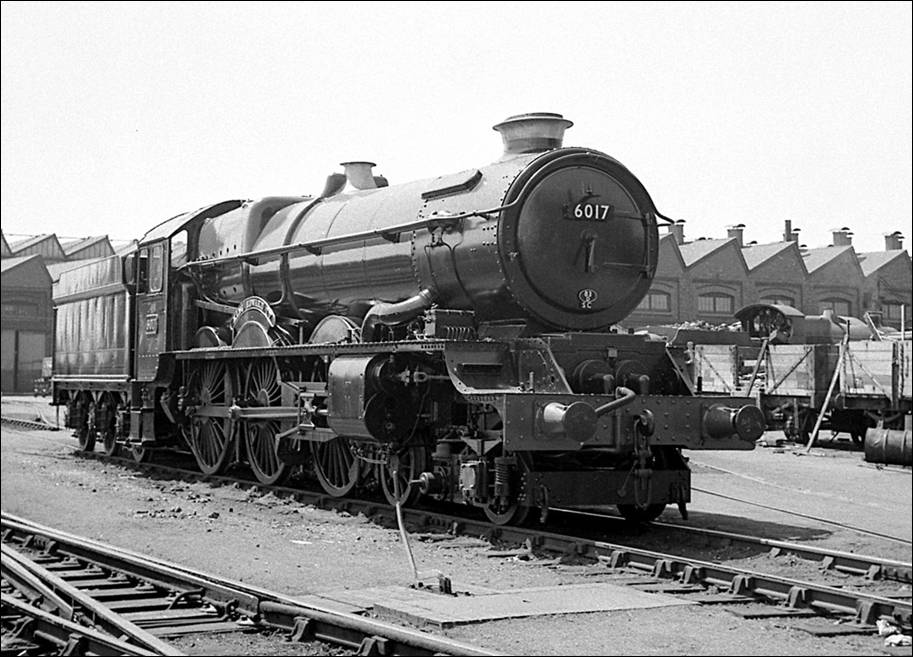
6017 King Edward IV,
built in 1928, newly-overhauled outside Swindon Works on 16th June
1957.
The loco had just been fitted
with a double chimney to improve its performance.
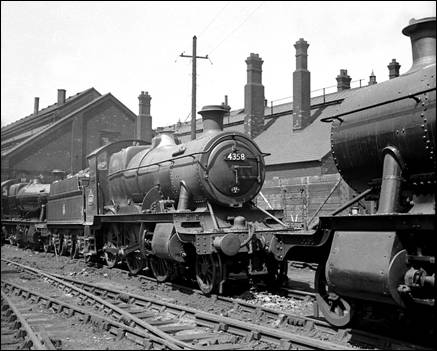
Left: veteran GWR 2-6-0 4358 (built
1914) at
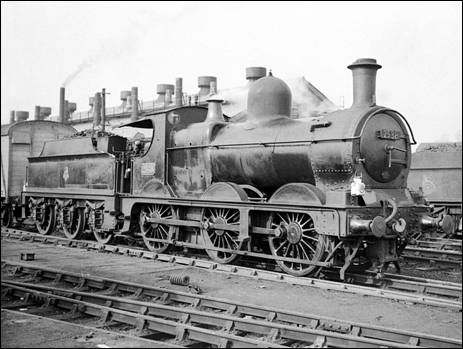
Right: 0-6-0 ‘Dean Goods’ 2538 (built 1897) at Oswestry on 1st March 1957. 2538 was withdrawn only a few weeks
later. With 2516 (now preserved) they
were the last survivors of their class and had been retained principally for
working the Abermule – Kerry branch line which had
recently closed. In the early 1950s Oswestry shed was home to a fascinating collection of
locos, including also the last Duke 4-4-0s, Cambrian Railways 0-6-0s and
2-4-0Ts, the latter retained for the
= = = = = =
Most of my photographs in
South Wales are on the page Railways1, but here is a 1957 scene from Llantrisant on the main
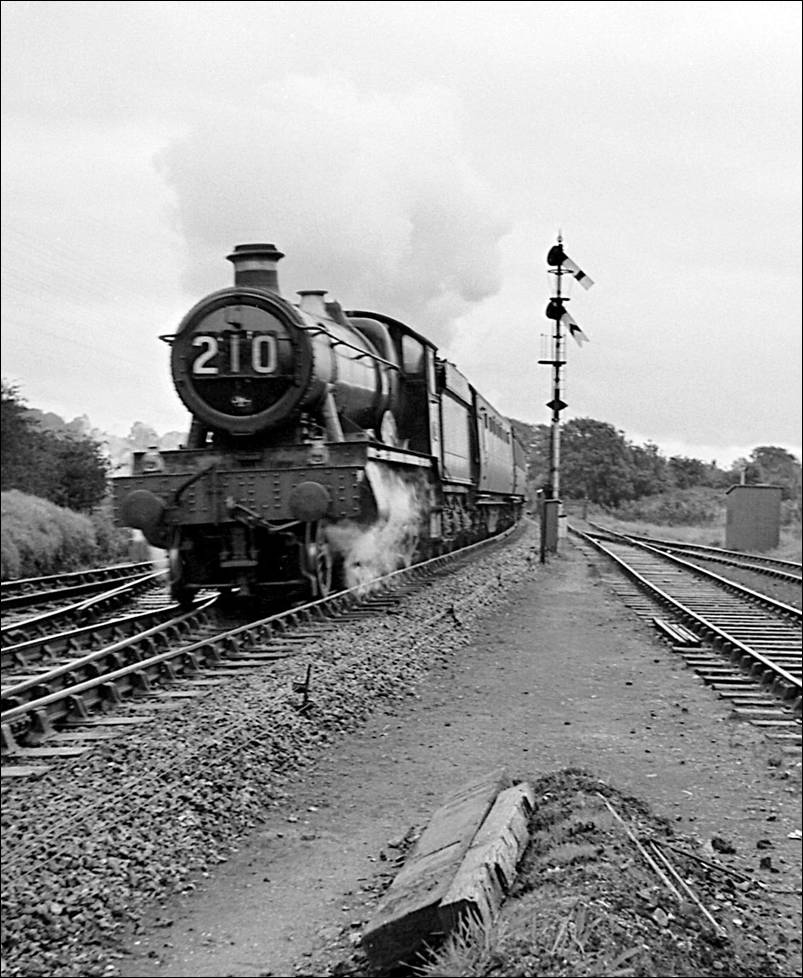
With its brass and copper-work
shining nicely, 4988 Bulwell Hall approaches
Llantrisant with the 9.30
= =
= = =
We move on to 1958: a year
when the retrenchment of the steam locomotive and of branch lines sadly moved
up a gear. The first weekend of the
year saw the closure of a Welsh outpost of the old
Here are some photos taken on that day, 5th January
1958.
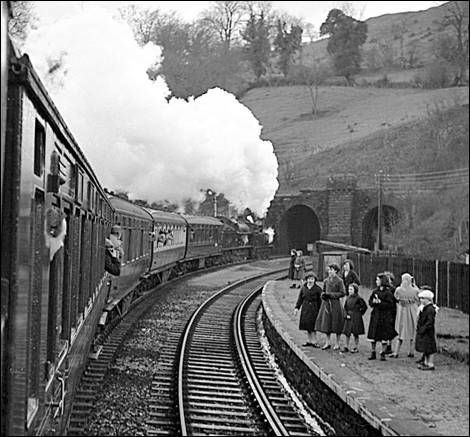
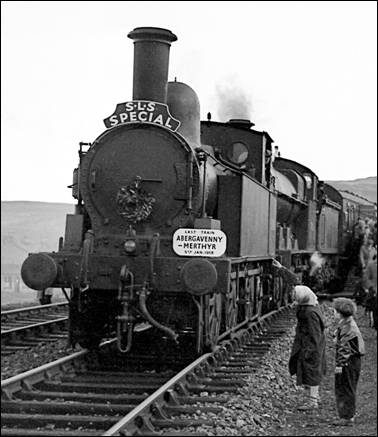
An all-female audience turns
out at Clydach to watch the last train climbing
steadily up the 1 in 38 towards Brynmawr on its way to Merthyr.
Two children look in
fascination at the ceremonial wreath on the smokebox
of 58926 during a pause at Dowlais High Street
station.
I wonder where those two are now, and do they
remember gazing in awe at an LNWR Coal Tank?
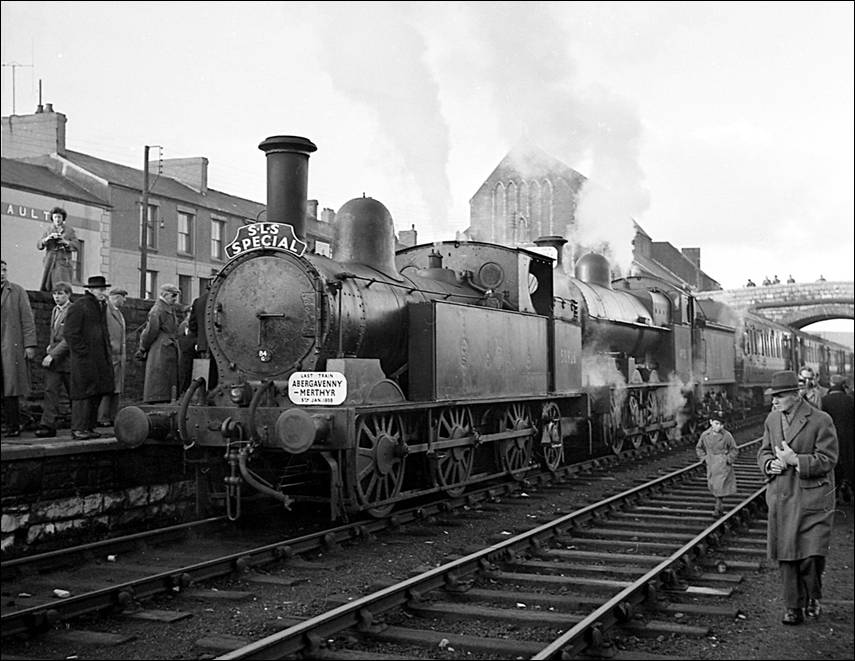
58926 and 49121 at Ebbw Vale
High Level with the last passenger train.
A lady climbs a wall to secure
a good photo and men in hats, fresh out of Chapel, look on with suitably solemn
expressions.
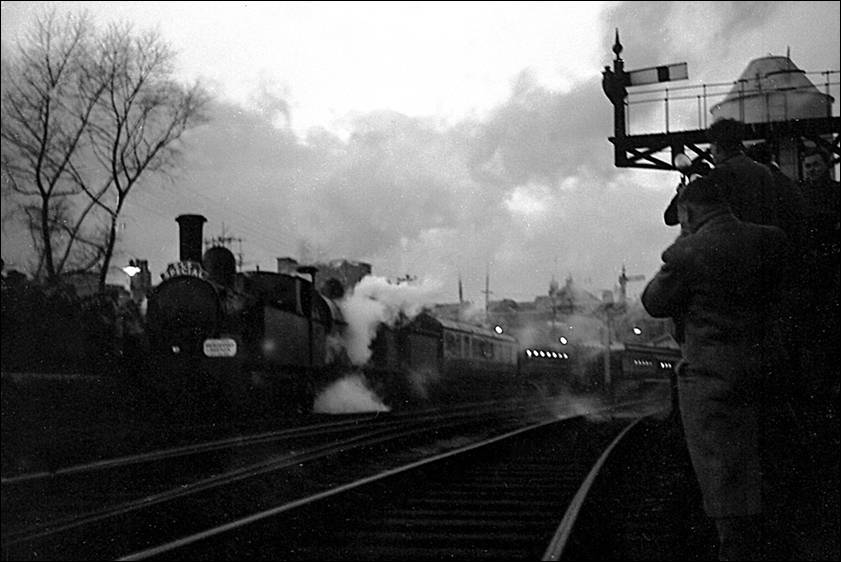
As evening falls in
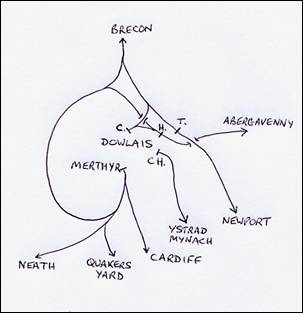
The sketch map
shows the curious railway geography of Merthyr and Dowlais,
omitting certain freight-only lines.
Dowlais had four
stations: Central (‘C’ on the map), High
Street, (‘H’), Cae Harris (‘CH’), and Dowlais Top (‘T’).
Dowlais lies near the
1250’ contour, whereas Merthyr is about 500’ above sea level, giving rise to
the circuitous route taken by the railway.
The lines had
been built principally to serve the coal and iron industries, but the
elimination of those activities has largely been followed by the railways.
All the lines shewn on the map were open for passenger services in 1950,
but by 1965 all had closed except the Merthyr –
There are no
longer any rail freight services to Merthyr and district.
and
further north in
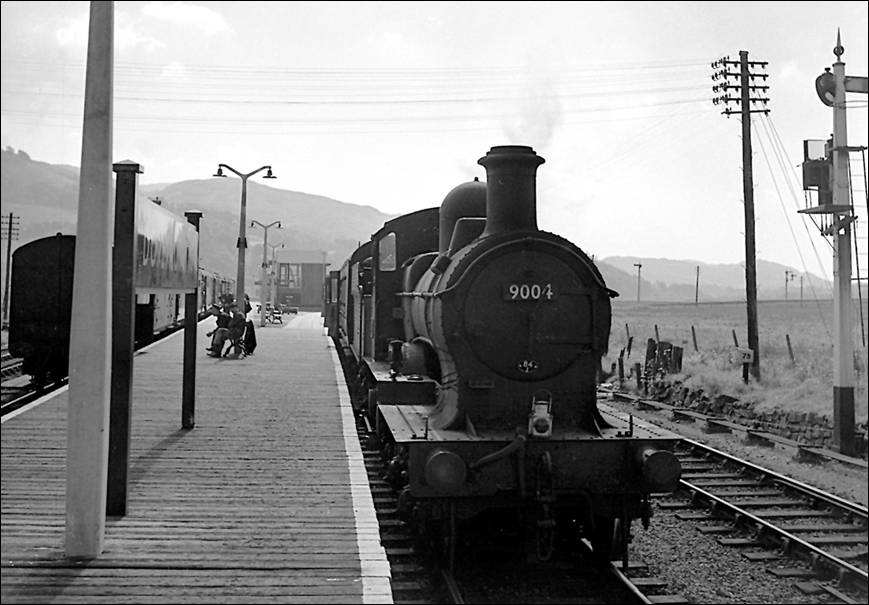
4-4-0 no.9004 at Dovey Junction with the 12.15 Barmouth
to Machynlleth train on 11th September
1958
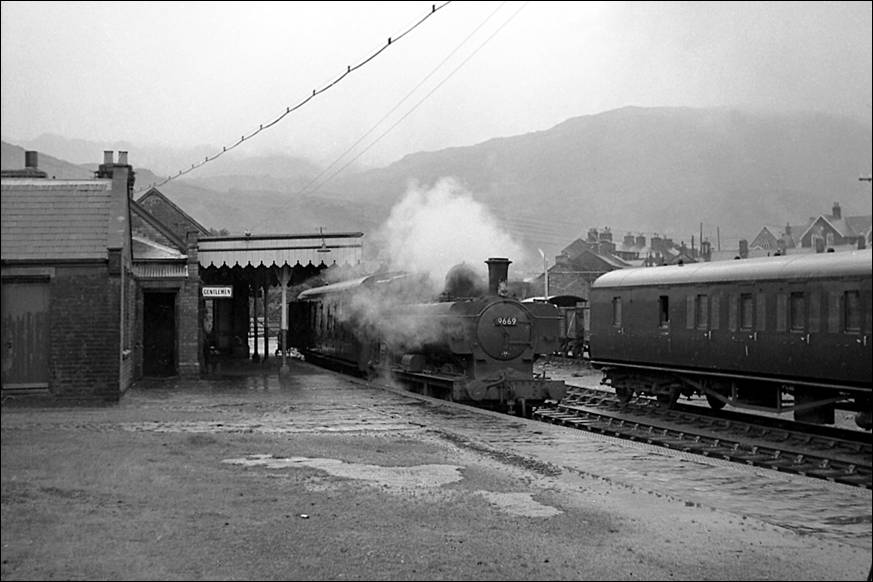
Blaenau Ffestiniog
in the rain: GWR 0-6-0PT no 9669 arrives
with the 11.50 from Bala on 15th September
1958
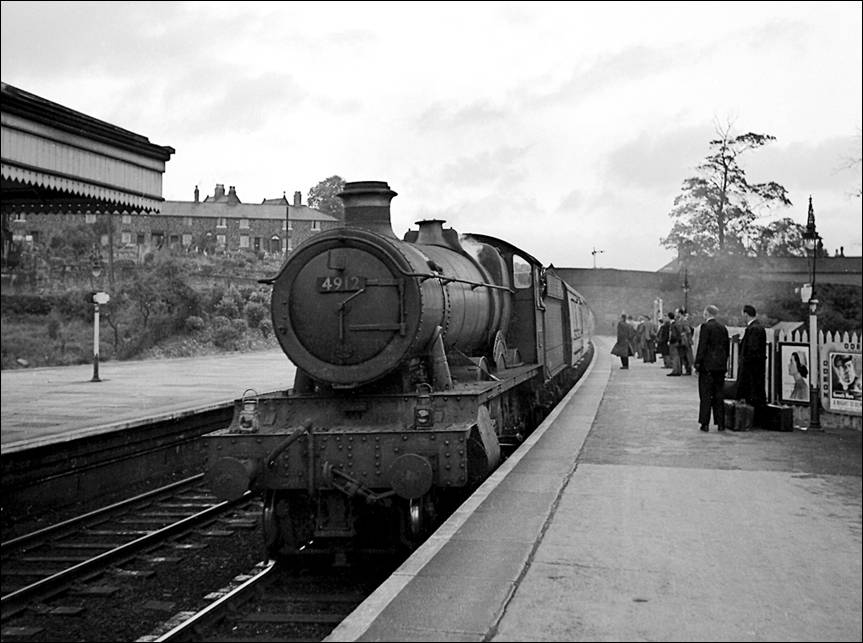
GWR 4912 Berrington Hall arrives at Ruabon with the 4.30 pm
Another
branch line closure of 1958 was an attractive route on the western outskirts of
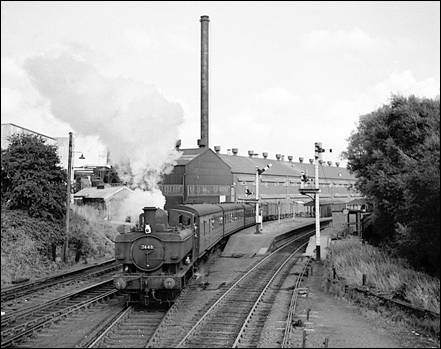
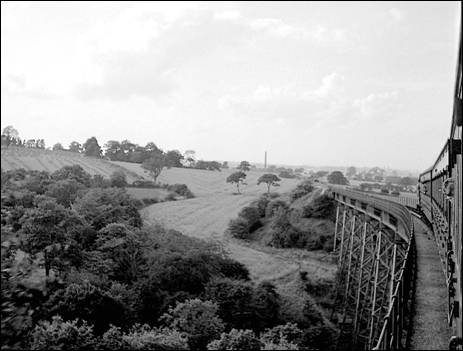
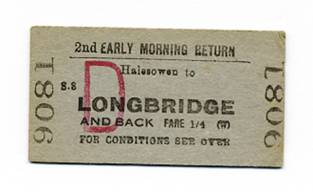
This line from Longbridge, on the Midland Railway’s line to
Some
long-gone scenes from
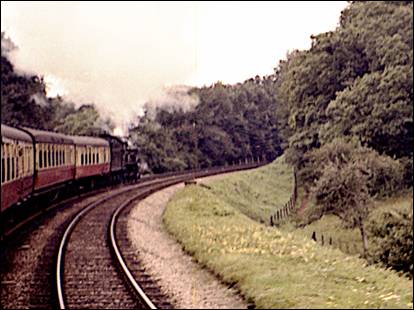
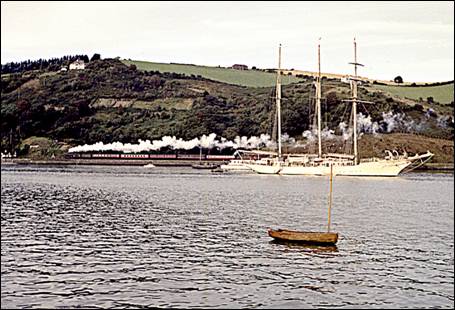
Colour photography was very expensive
in the 1950s, but here are two taken in August 1958:
A view from
the carriage window of a 70xx Castle climbing Hemerdon
bank with the 1.20 Penzance – Paddington train.
Steam hangs in the evening air
as a Kingswear to Exeter St David’s train sets off
alongside the Dart estuary behind a GWR 4-6-0.
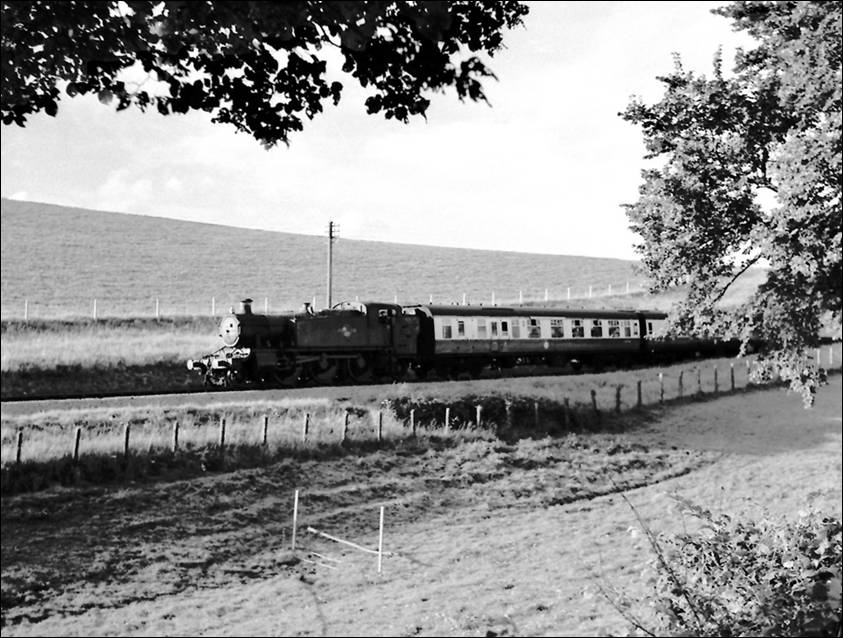
The classic
lines of GWR 2-6-2T 4178 near Churston with the Kingswear portion of the Royal Duchy from Paddington on 3rd September 1958.
This line is now a preserved
steam railway.
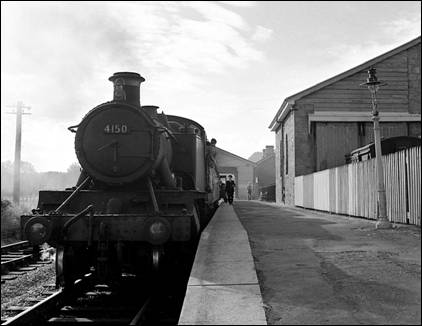
Two
4150 at Moretonhampstead
with the 5.10 pm train for Newton Abbot on 4th September 1958. Note the typical Brunel-style overall roof
in the background.
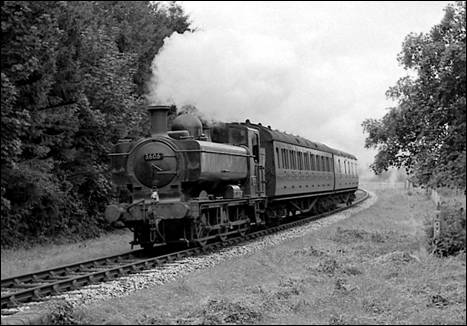
0-6-0PT 3606
near Cove Halt with the 9.30 Exeter St David’s – Dulverton
Exe Valley line train on 6th September
1958.
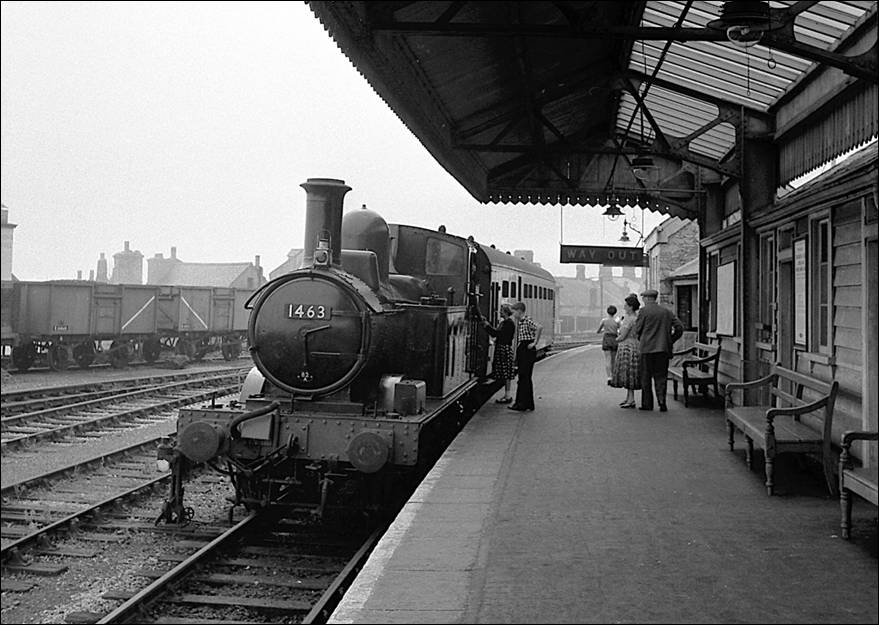
Children talk to the driver and
my parents look on at Brixham as 1463 waits with the
auto train for Churston on 5th September
1958.
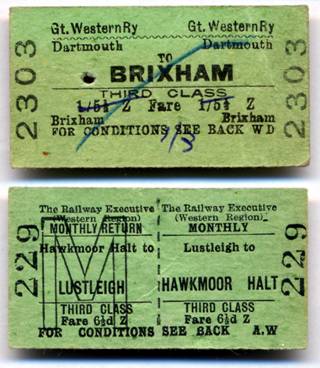
1959
began with a school trip on 13th January to Swindon Works and
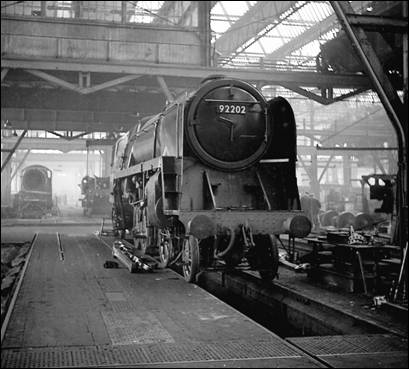
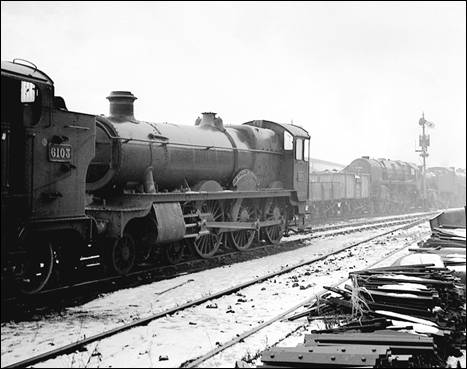
Inside
The pioneer Hall class loco, 4900
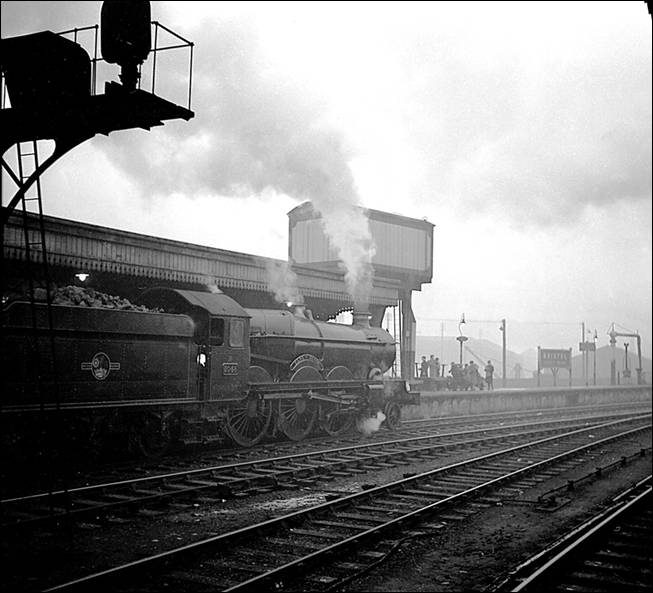
It is a murky winter’s evening
as
The Bristolian was the world’s
fastest steam train, running non-stop to Paddington in 105 minutes at an
average speed of 67 mph. Fifty years on
and trains are only four minutes faster, although they do now stop three or
four times en route to London.
Scenes
on the
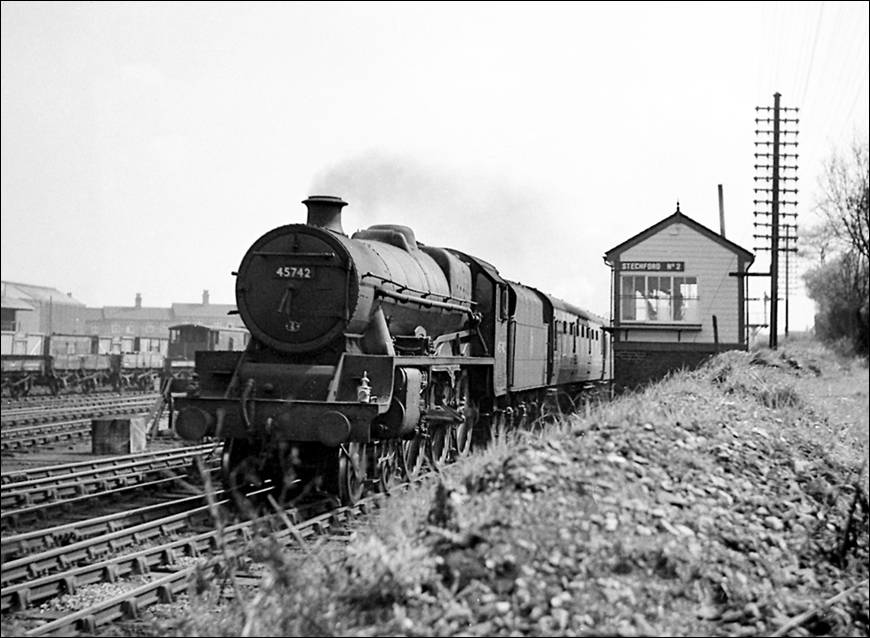
LMS Jubilee 4-6-0 45742 Connaught passes Stechford
with the 8.50 from Euston to Birmingham New Street and
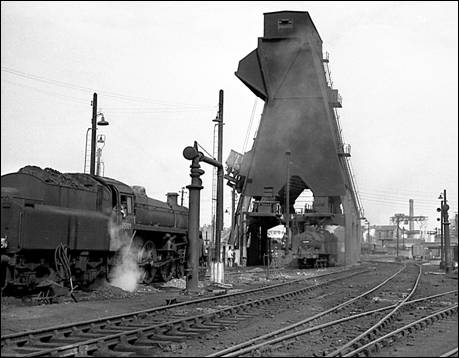
The coaling
plant at Saltley depot (21A) with 4-6-0 75009 at the
left and a 3F 0-6-0 at the plant. A wagon can be seen on the hoist.
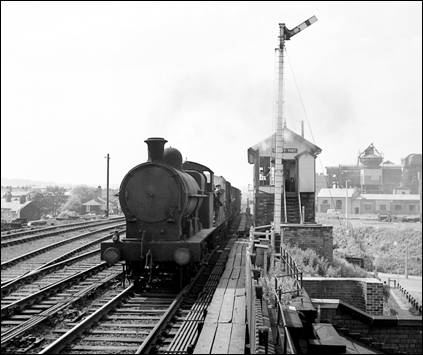
LNW 0-8-0
49099 approaches Dudley Port with an up freight on the Stour Valley line.
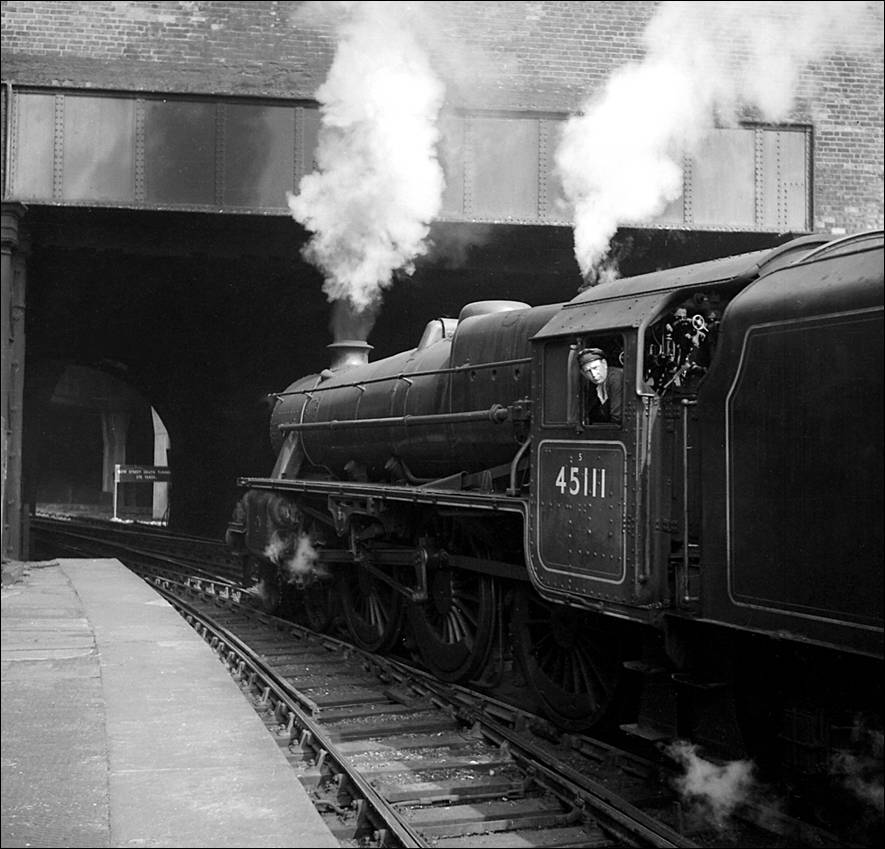
45111 sets off from Birmingham
New Street with the 3.53 pm to
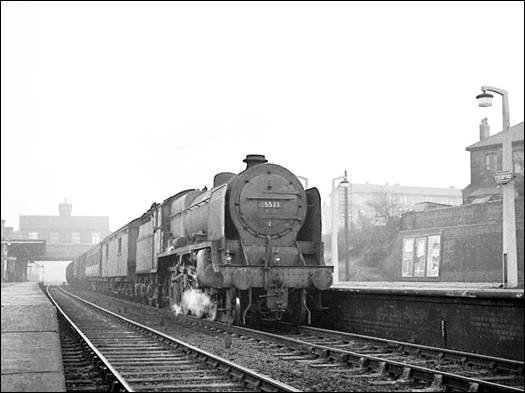
Engineering work on the
Unrebuilt Patriot class 4-6-0 45533 Lord
Rathmore passes Stechford
with a diverted parcels train.
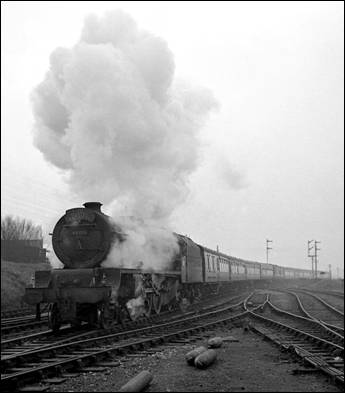
4-6-2 no. 46200 The Princess Royal, looking very grubby
and clearly in poor mechanical condition, lethargically approaches Stechford with the diverted up Ulster Express
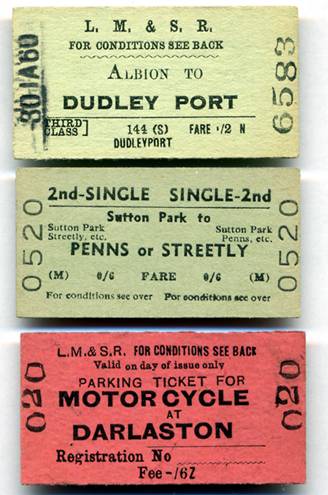
Tickets from LMR Birmingham
area stations
Evening
in
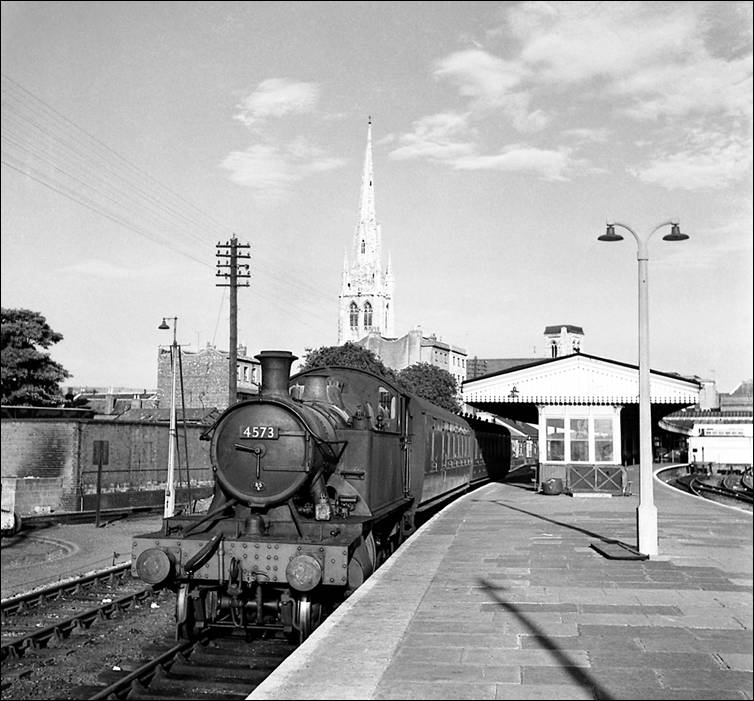
GWR 2-6-2T no. 4573 waits at
Cheltenham Spa St James with the 7.15 pm to Kingham
on 25th September 1959.
The
last slip coach service
Slip coaches were a nineteenth century
development whereby a carriage was uncoupled from the rear of an express train
at speed as it approached an intermediate station, enabling such destinations
to enjoy the benefits of ‘fast’ arrivals.
They were widely used throughout the country until the First World War,
but on a reduced scale thereafter.
Suspended once more during the Second World War, only the Great Western
Railway revived them afterwards. In the
early 1950s there were about a dozen slip coach services each day on former GWR
lines, serving such destinations as Didcot and
Reading (from up trains) and Westbury, Taunton, Princes Risborough
and Bicester (from down trains). Gradually, they were replaced by additional
calls by expresses, until, by 1959, only one such working survived, shewn below, which was discontinued in September 1960. Disadvantages of the slip coach were the
need for specially equipped carriages, a pool of guards trained to operate the
braking mechanism, and the need for special arrangements to return the carriage
to the starting point for its next working.
Bicester was the location of the last slip
coach service. Two trains left
Paddington for
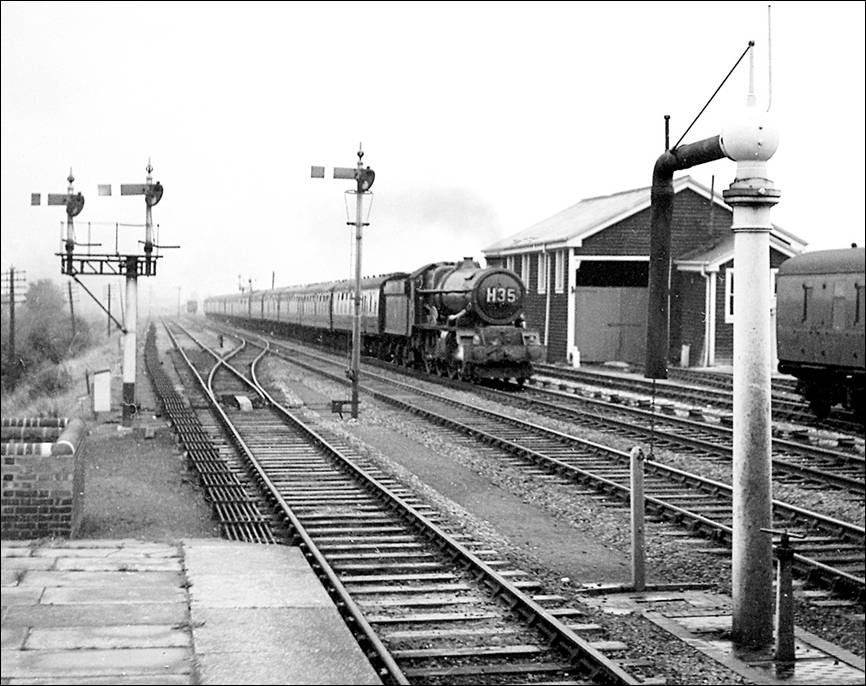
A GWR King approaches Bicester North at speed
with the 5.10 pm Paddington to
The slip coach has already been
dropped from the rear of the express and can be seen some way behind as it
coasts to a halt in the station. The
rear vehicle of the 4.34 Paddington –
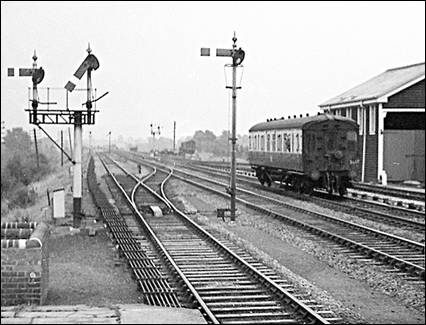
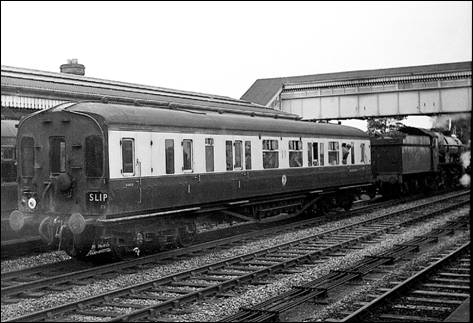
A closer view of the slip coach
rolling gently to a stop on the through line.
A few moments
later 6001 King Edward VII backs onto
the now stationary slip coach before attaching it to the front of the 4.34
Paddington – Wolverhampton semi fast train which was already waiting in the
platform alongside.
Note in the last picture the
special slip coach tail lights at the left of the carriage and also the large
warning bell at both ends. The vehicle
is number W7374, built in 1948. It has
a guard’s slip compartment at each end and is shown carrying the late 1950s
Western Region chocolate and cream livery with the BR crest on the side. There was one first-class compartment
(seating six) and four second- (originally third-) class compartments each
seating eight passengers. Note that in
the few seconds which elapsed between taking the first
and second photos, the up platform to main line signal has been lowered, ready
for the 6.0 pm Banbury to Princes Risborough stopping
train.
Bicester station is still quite smart
today, but there have been many changes.
The through lines have been removed, the footbridge has lost its roof,
the goods shed has gone, and the semaphore signals have been replaced by colour
lights. The GWR Kings and Castles which
thundered through at over 80 mph have been largely replaced by diesel multiple
units which mostly stop at the station which is now busier than at any time in
its history. But in the autumn of 2011
Chiltern Railways introduced their Main Line service from Birmingham Snow Hill
and Moor Street to London Marylebone and loco-hauled expresses once more dash
through Bicester at speed, though the motive power is
now diesel.
My itinerary on this trip
appears below. I used a pre-booked
Circular Tour Ticket, which offered a discount of 10% off the ordinary single
fare. Apart from witnessing the arrival
of the slip coach at Bicester, the tour included a
delightful trip from Worcester to Oxford by way of what is nowadays called the
Cotswold line, and a journey on the Oxford – Princes Risborough
line via Thame which closed a few years later.
B’ham
New Street dep 10.27 (LMS Black 5 loco)
Worcester
Shrub Hill arr 11.26 dep 12.00 (
Princes
Risborough arr 3.41 dep 4.10 (GWR 0-6-0PT
64xx)
Bicester
arr 4.46 dep 6.25 (GWR King 6001)
B’ham
Snow Hill arr 7.57
A most satisfactory day’s
travelling!
My other railway pages can be accessed by clicking on the links below:
Railways.htm (Birmingham Snow Hill in 1953, Three West Midlands GW branches and South Wales in the 1950s)
Railways2.htm (Brecon and -Mid-Wales; the Somerset & Dorset line, GWR and LSWR lines in Somerset, Devon and Cornwall: all 1957-1962)
Railways3.htm (the
Railways4.htm (Birmingham area LMR; glimpses of Boston, Peterborough, and Lincoln; GWR lines in North Wales; a few shots on the Southern: all 1961-1963)
Railways5.htm (the decline of steam, including the Southampton line, Birmingham GW, North Wales, Stroud Valley and Manchester Victoria: 1964 -1968)
Trams.htm (the last days of
Tyseley.htm (scenes at Tyseley and on the line between Tyseley and Birmingham Moor Street)
WHRamdLlangollen.htm (the revived Welsh Highland Railway, plus the Ffestiniog, Welshpool & Llanfair and Llangollen lines)
If our Home Page is not listed to the left of this page, it may be accessed here: www.robertdarlaston.co.uk
Could this be a cry of nostalgia by a
railway enthusiast?
O how I long to travel back
And tread again that ancient track!
That I might once more reach that
plain
Where first I left my glorious train
It is, in fact, from The
Retreat by Henry Vaughan, who was born in Breconshire in 1622 and died
there in 1695.